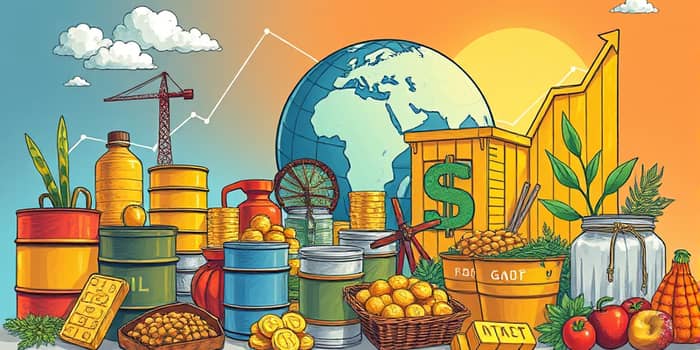
In a world shaped by shifting supply chains, evolving energy systems, and geopolitical uncertainties, understanding the raw materials that power our economies is more important than ever. As we approach 2026, investors face a landscape marked by moderation in some sectors, resilience in others, and transformative opportunities driven by the green transition. This comprehensive guide navigates the key commodity markets—energy, industrial metals, precious metals, and agriculture—offering insights and practical strategies to help you build a robust portfolio.
Market Overview and Future Prospects
The overall sentiment for 2026 carries a mixed narrative with divergent sector performance. After several years of strong rallies, broad commodity prices are expected to cool, with a projected global decline near 7 percent. Yet, this moderation masks significant variation among sectors. Energy markets confront oversupply risks but also benefit from clean technology investments, while industrial and precious metals ride the wave of green infrastructure and safe-haven demand respectively.
- Global commodity prices forecast to decline by 7% in 2026
- S&P Goldman Sachs Commodity Index expected to dip 0.9%
- Crude oil may buck the trend by holding steady or rising
For investors, these projections highlight the need for selective exposure. Blanket positions in broad commodity indices may underperform targeted bets on resilient subsectors or regions at the forefront of renewable energy deployment. By understanding the drivers behind each market segment, you can tailor your approach to capture upside and manage downside.
Energy Sector: Navigating Transition and Stability
As 2026 begins, oil and gas markets sit at a crossroads. Abundant supply, driven by OPEC+ policy shifts and subdued industrial demand, puts downward pressure on prices. Brent and WTI futures hover around $56 and $52 per barrel, with energy prices overall expected to fall about 10 percent year-over-year. Yet, a parallel story unfolds: unprecedented capital into renewable energy is creating new demand engines and reshaping the global energy mix.
- Oil prices projected near $56/52 per barrel (Brent/WTI)
- Natural gas to remain a relative outperformer
- Clean technologies driving long-term demand
Investors should weigh traditional hydrocarbon exposure against renewable energy plays. Companies expanding wind, solar, and grid infrastructure benefit from supportive policies and corporate decarbonization goals. Meanwhile, natural gas offers a transitional fuel story underpinned by steady demand in Europe and Asia and growing US export capacity.
Industrial Metals: Powering the Green Revolution
Industrial metals stand at the heart of the energy transition. Copper, aluminum, lithium, nickel, and cobalt are indispensable for electric vehicles, battery systems, solar installations, and upgraded grids. After strong returns in 2025—copper up 28.8 percent, aluminum 12.5 percent—these commodities remain favorably positioned for growth in 2026 as governments and corporations accelerate emissions targets.
Supply constraints add to the bullish case. Many projects face delays due to permitting hurdles or geopolitical tensions, while new mine development timelines stretch over a decade. Chinese investments in overseas mining and processing hubs may alleviate some bottlenecks but also introduce concentration risks.
With substitution dynamics emerging—copper and aluminum can replace each other in certain applications—price crossovers may spur innovation in material usage. Recycling momentum, especially for aluminum, adds another layer of complexity, creating both risks and opportunities for investors who stay ahead of technological trends.
Precious Metals: The Role of Safe-Havens
In 2025, precious metals delivered outsized gains: silver soared 93 percent and gold climbed nearly 60 percent, driven by robust investment interest, central bank purchases, and geopolitical uncertainty. As 2026 unfolds, analysts forecast a further 5 percent rise, supported by sustained safe-haven demand amid geopolitical uncertainty and currency fluctuations.
Silver’s supply deficit looks set to continue for a seventh consecutive year, with industrial applications—from electronics to solar panels—bolstering consumption. Gold remains the ultimate crisis hedge, offering portfolio diversification when equities or currencies waver. For balanced exposure, consider exchange-traded funds, allocated alongside physical holdings or futures positions to optimize liquidity and cost.
Agricultural Commodities: Balancing Supply and Demand
Agricultural markets reflect the dual pressures of weather-driven supply shocks and shifting consumption patterns. In 2025, soybeans led gains at nearly 14 percent, while corn and wheat saw modest declines amid ample inventories. Livestock commodities, buoyed by cattle pricing, outperformed staples tied to crop cycles.
- Soybeans: +13.9% in 2025
- Corn and wheat: slight declines amid abundant supply
- Livestock: cattle prices up 11.2% on drought impacts
Looking ahead, grain supplies are likely to remain favorable, though policy shifts and trade negotiations—particularly between the US and China—could introduce volatility. Biofuel mandates, currency movements, and climate anomalies also warrant close monitoring for investors seeking to time entry points or hedge price swings.
Geopolitical and Policy Influences
Geopolitics remains a key commodity market wildcard. From the Russia–Ukraine conflict to shifting trade alliances, unexpected developments can trigger sharp price moves. Investors should monitor policy decisions on tariffs, environmental regulations, and strategic resource stockpiling, as these factors often exert rapid, outsized impacts on supply chains and market sentiment.
Climate-related risks—droughts, floods, and extreme weather—are intensifying, creating both supply disruptions and long-term shifts in agricultural patterns. Engaging with scenario analysis and stress testing can help portfolio managers prepare for abrupt market swings and regulatory changes.
Practical Strategies for Investors
With a diverse commodity landscape, a disciplined approach is essential. Consider the following guidelines:
- Maintain diversified exposure across sectors to balance cyclical and structural trends
- Use futures, options, and ETFs to tailor risk-reward profiles
- Integrate fundamental analysis of supply-demand balances with technical signals
- Stay informed on policy shifts and geopolitical developments
Allocating capital tactically—tilting toward energy transition metals, safe-haven precious metals, or resilient agriculture—can enhance returns while mitigating risks. Regular portfolio rebalancing, stress testing under extreme scenarios, and cost management through low-fee instruments are best practices for long-term success.
Conclusion: Embracing Opportunities in 2026
As we embark on 2026, the commodity universe offers both headwinds and tailwinds. Price moderation across broad indices coexists with pockets of robust growth, driven by renewable energy investments, safe-haven demand, and evolving consumption patterns. By combining macro insights with targeted strategies—leveraging thematic trends and managing geopolitical risks—investors can navigate uncertainty and capture the transformative potential of raw materials. Now is the time to position portfolios thoughtfully, embrace innovation, and harness the power of commodities to fuel sustainable growth.
References
- https://www.parametricportfolio.com/blog/commodity-market-outlook-2026
- https://www.morganstanley.com/im/en-au/institutional-investor/insights/articles/trends-driving-optimism-in-2026.html
- https://www.aberdeeninvestments.com/en-us/investor/insights-and-research/commodities-the-year-that-was-the-year-that-could-be-2026
- https://www.oxfordeconomics.com/resource/commodities-outlook-2026-another-challenging-year-ahead/
- https://blogs.worldbank.org/en/developmenttalk/the-commodity-markets-outlook-in-eight-charts2
- https://about.bnef.com/insights/commodities/commodities-in-2026-10-numbers-to-watch-from-power-to-oil/
- https://www.spglobal.com/market-intelligence/en/news-insights/research/2026/01/commodity-price-watch-january-2026