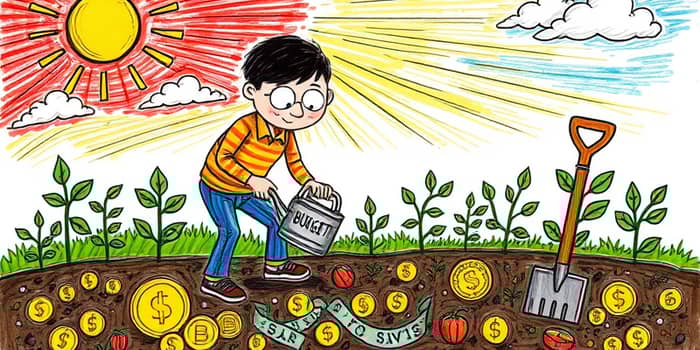
Imagine your financial life as a garden, where every decision you make is like tending to soil, planting seeds, and nurturing growth.
This metaphor can transform how you view money, turning intimidating tasks into manageable daily habits.
With consistent effort and patience, you can cultivate a landscape of prosperity that withstands economic storms and blooms over time.
Financial literacy is the foundation of this garden, and understanding it is the first step toward a healthier financial future.
Just as a gardener must know the soil, we must grasp the current state of financial knowledge to plant wisely.
The Soil: Understanding Financial Literacy Statistics
Financial literacy serves as the fertile ground for your garden, but recent data shows it needs improvement.
In the U.S., adults average only 49% correct on financial quizzes, a rate that has stagnated since 2017.
This highlights a critical gap in our collective understanding of money matters.
Generational differences reveal stark contrasts in financial knowledge.
- Gen Z scores lowest at 38% correct, indicating a need for early education.
- Millennials follow at 46%, often grappling with debt and inflation.
- Baby Boomers lead at 55%, but this is still below optimal levels.
Gender and racial gaps further complicate the landscape, with structural barriers affecting outcomes.
For instance, women score 43% correct compared to men at 53%, and Black Americans at 34% face unique challenges.
The cost of low literacy is staggering, with individuals losing nearly $1,000 per year on average.
However, higher literacy correlates with better resilience, such as being less debt-constrained.
This table underscores the disparities that must be addressed to enrich our financial soil.
The Weather: Navigating the 2026 Financial Outlook
As gardeners watch the sky, we must anticipate economic conditions to protect our growth.
In 2026, pessimism is high, with 32% expecting finances to worsen due to inflation and politics.
Yet, there is mixed optimism, as 34% believe things will improve, and 63% see 2026 as better than 2025.
Emotions play a big role, with many feeling anxious or stressed about their financial future.
Common goals for 2026 reflect a focus on foundational steps to weather these storms.
- Pay down debt: A top priority for 19% of Americans, especially with high credit card rates.
- Increase income: 14% aim for higher earnings or side hustles to boost stability.
- Build emergency savings: 13% recognize the need for a safety net in uncertain times.
- Improve budgeting: 12% seek better planning to combat rising prices.
- No specific goals: 10%, often seniors, lack clear financial direction.
These goals act as seasonal plans to ensure your garden thrives despite challenges.
Trends like AI in finance and lower interest rates may offer new tools for cultivation.
The Plants: Key Personal Finance Topics for Growth
Your financial garden is filled with various plants, each representing a core area of personal finance.
Mastering these topics is like selecting the right seeds for a bountiful harvest.
The eight key areas from financial literacy indices provide a comprehensive framework.
- Saving: Essential for emergency funds and long-term security.
- Budgeting: Crucial to manage daily expenses and plan for the future.
- Debt management: Vital to eliminate high-interest burdens that choke growth.
- Investing: Key for building wealth through retirement accounts and other vehicles.
- Insuring: Protects against unexpected risks that could devastate your garden.
- Risk comprehension: A weak spot for many, with only 36% understanding it well.
- Retirement fluency: Ties directly to overall well-being in later years.
- Financial wellness: Encompasses all aspects to foster resilience and peace.
Each area requires dedicated attention and learning to flourish.
For 2026, new trends like loud budgeting and updated tax rules will influence how we tend these plants.
Staying informed can help you adapt your strategies for optimal growth.
The Gardeners: Tailoring Insights to Different Demographics
Just as gardens vary by climate, financial needs differ across generations and groups.
Understanding these nuances helps tailor your approach to cultivation.
Gen Z and Millennials, with lower literacy, often focus on debt reduction and need targeted education.
Women and underserved communities face larger gaps and more stress, requiring structural support.
Seniors may carry persistent debt and have fewer goals, highlighting the need for lifelong learning.
Experts emphasize that stronger financial literacy correlates with better outcomes.
- Gen Z: Benefit from early interventions and digital tools.
- Millennials: Should prioritize debt paydown and investment basics.
- Baby Boomers: Need to focus on retirement planning and risk management.
- Women: Can gain from community programs and confidence-building resources.
- Minority groups: Require equitable access to financial education and opportunities.
By recognizing these differences, you can cultivate a garden that suits your unique plot.
Cultivation Steps: Practical Actions to Nurture Your Financial Garden
Transforming your financial life requires actionable steps, much like daily gardening tasks.
Start by assessing your current literacy with tools like the P-Fin Index quiz to know your soil quality.
Then, embark on a journey of consistent habits to foster growth and resilience.
Here is a simple framework to guide your cultivation process.
- Plant: Begin with budgeting and saving—set clear goals and automate contributions.
- Weed: Tackle debt aggressively—prioritize high-interest balances and avoid new debt.
- Grow: Invest in education and assets—learn about markets and diversify your portfolio.
- Harvest: Reap the rewards of well-being—enjoy financial peace and plan for legacy.
Incorporate regular reviews and adjustments to adapt to changing conditions.
Use technology, such as AI-driven apps, to streamline your efforts and gain insights.
Remember, financial cultivation is a marathon, not a sprint; patience yields the best results.
By embracing this gardening mindset, you can overcome obstacles and achieve lasting prosperity.
Let this article inspire you to take the first step today, nurturing your financial garden with care and intention.
References
- https://www.tiaa.org/public/about-tiaa/news-press/press-releases/2025/06-09
- https://www.bankrate.com/banking/financial-outlook-survey/
- https://www.bluevine.com/blog/financial-literacy-statistics
- https://www.nerdwallet.com/finance/studies/2026-consumer-outlook-report
- https://www.napa-net.org/news/2026/1/talking-points-putting-a-price-on-financial-literacy/
- https://www.statista.com/statistics/1173591/opinion-personal-financial-situation-past-year-age-us/
- https://401kspecialistmag.com/americans-lose-over-900-due-to-limited-financial-literacy/
- https://www.fisherinvestments.com/en-us/insights/market-commentary/refresh-your-personal-finances-for-2026
- https://wealthwave.com/zacharysandoval/blog/the-financial-literacy-emergency-of-2026
- https://www.youtube.com/watch?v=DBZ2LPjhV9o
- https://www.intuit.com/blog/innovative-thinking/2026-financial-forecast-mindful-stress/
- https://www.privatebank.bankofamerica.com/articles/2026-consumer-outlook.html
- https://www.oecd.org/en/publications/oecd-infe-toolkit-for-measuring-financial-literacy-inclusion-and-well-being-2026_92f2d439-en.html
- https://www.fidelity.com/learning-center/personal-finance/2026-money-trends
- https://www.axios.com/sponsored/5-financial-trends-you-can-bank-on-in-2026