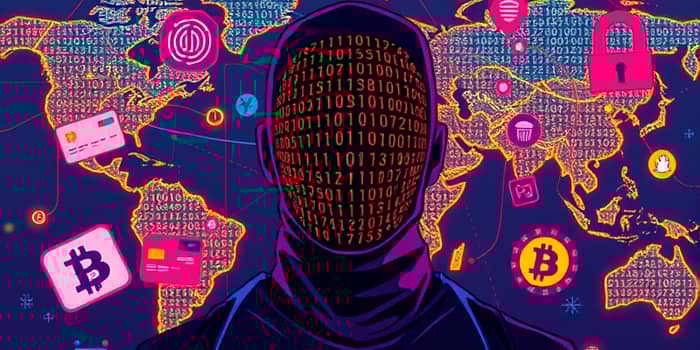
Every day, millions of transactions cross digital highways unimpeded, but beneath the surface lurk predators wielding advanced tools to steal identities and funds. This article delves into the dark art of online financial fraud and shows how individuals and organizations can reclaim control.
Rising Threat of Digital Disguises
Online financial fraud has evolved far beyond simple phishing emails and stolen cards. Fraudsters have harnessed agentic AI and deep learning techniques to create synthetic personas that pass verification checks.
Synthetic identity fraud alone accounts for an astonishing 80% of new account breaches in the credit card sector, leaving lenders facing billions in losses. Account takeover attempts surged by 51% in early 2025, fueled by credential stuffing and automated attacks.
Meanwhile, criminals refine digital forgeries to slip past liveness checks and biometric scanners, turning once-reliable safeguards into mere formalities. The rapid growth of digital payment systems and the push for seamless user experiences compound the challenge, inadvertently opening more doors for imposters.
Economic Impact of Online Fraud
The financial toll of digital disguises is staggering. In the U.S. alone, synthetic identity fraud drains $30–$35 billion annually from the economy, while global cybercrime costs are on track to hit $10.5 trillion by 2025. Merchants worldwide brace for cumulative losses exceeding $343 billion between 2023 and 2027 as online payment fraud rises.
- Financial services face net fraud rates of 5.5%+ in identity verifications.
- E-commerce platforms report fraud rates near 19.2%, nearly five times the global average.
- Crypto exchanges and wallets suffered losses of $17 billion in 2025 alone.
Beyond direct theft, the erosion of trust can chill digital commerce, prompting tighter regulations and higher compliance costs for legitimate businesses. Consumers, wary of sophisticated scams, may hesitate to adopt new financial technologies, stifling innovation.
Fraudster Tactics: The Art of Deception
Modern fraud actors employ a suite of tactics to mask their true identities and intentions. Chief among these are:
In the realm of digital disguises, no tactic is off-limits. Deepfakes give voices and faces to phantom identities, making AI-enabled imposters nearly indistinguishable from real individuals. Phishing remains a staple, with SMS and email lures leading victims to fake portals that harvest login credentials in seconds.
Pig butchering schemes prey on crypto enthusiasts, using romance and social engineering over weeks to coerce victims into transferring escalating sums. The average scam payment jumped to $2,764 in 2025, a 253% jump from the previous year, as scammers leverage high-yield investment promises and fake success stories.
Unmasking Fraud: Prevention Strategies
Combating digital disguises demands a multilayered defense strategy, blending user vigilance with organizational safeguards and advanced technology. Here are key measures for each layer of defense:
- User Tips:
- Use unique, complex passwords and enable MFA on all accounts.
- Verify unsolicited requests by contacting institutions directly.
- Monitor statements and set up real-time alerts for transactions.
- Maintain updated antivirus, anti-spyware, and firewall protections.
- Organizational and Tech Methods:
- Deploy predictive behavioral analytics and machine learning analytics for anomaly detection.
- Implement biometric authentication with liveness detection and dynamic profiling.
- Adopt real-time transaction monitoring to reduce false positives.
- Integrate AML systems, sanctions screening, and secure data handling protocols.
By fostering a culture of security awareness and investing in end-to-end fraud detection platforms, organizations can disrupt fraud rings before they inflict damage. Simultaneously, informed consumers who report suspicious activity quickly can prevent losses and help authorities trace criminal networks.
Looking Ahead: The Future of Fraud and Security
As technology evolves, so too will the arsenal of fraudsters. Experts predict that agentic AI agents—autonomous software that can plan and execute complex fraud campaigns—will emerge as the next frontier in cybercrime. Deepfake tools are expected to become more accessible, lowering the bar for would-be imposters.
Sectors such as banking, fintech, and e-commerce will face heightened risks. Digital onboarding processes must balance convenience with rigorous identity verification. Meanwhile, crypto platforms must advance beyond simple wallet checks, employing blockchain analytics to trace illicit fund flows.
Despite these challenges, a collaborative approach—uniting regulators, financial institutions, technology providers, and consumers—can turn the tide. Through innovation, education, and shared intelligence, the community can build an ecosystem where digital transactions remain secure, transparent, and trustworthy.
Digital disguises may continue to evolve, but so too will our defenses. By staying informed, adopting robust measures, and fostering vigilance at every level, we can unmask deception and safeguard the future of online finance.
References
- https://www.biia.com/synthetic-identity-fraud-statistics-2026-hard-numbers-big-threats/
- https://www.bannerbank.com/financial-resources/blog/tips-to-prevent-online-fraud
- https://www.chainalysis.com/blog/crypto-scams-2026/
- https://www.fraud.com/post/5-fraud-detection-methods-for-every-organization
- https://www.alloy.com/blog/2026-state-of-fraud-report-key-takeaways
- https://www.bankofamerica.com/security-center/fraud-prevention-checklist/
- https://www.experianplc.com/newsroom/press-releases/2026/experian-s-new-fraud-forecast-warns-agentic-ai--deepfake-job-can
- https://www.sanctions.io/blog/financial-fraud-prevention
- https://verafin.com/2026/01/5-fraud-trends-to-keep-pace-with-during-an-era-of-change/
- https://www.consumerfinance.gov/consumer-tools/fraud/
- https://www.wsfsbank.com/resources/six-common-scams-to-watch-for-during-2026/
- https://www.fdic.gov/consumer-resource-center/2021-10/avoiding-scams-and-scammers
- https://www.fincen.gov/resources/financial-trend-analyses
- https://www.merchantsavvy.co.uk/payment-fraud-statistics/