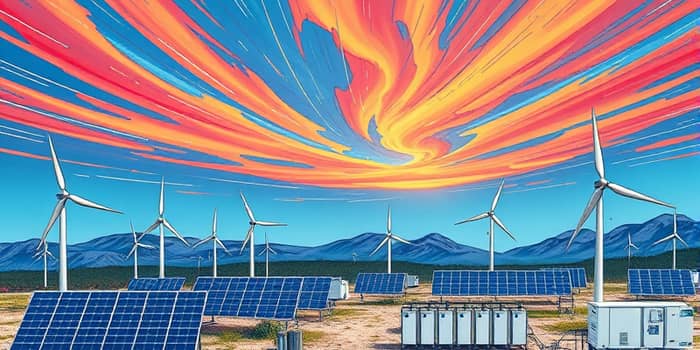
The global energy landscape is undergoing a seismic transformation, with 2026 marking a pivotal year where clean power ascends to dominance.
This evolution is driven by unprecedented cost declines and technological breakthroughs, creating a fertile ground for innovation and profit.
As renewables outpace fossil fuels, those who adapt can harness massive opportunities from shifting power dynamics to thrive in this new era.
The Cost Revolution: Scaling Profits from Affordability
Renewable energy costs have plummeted, making solar and wind the most affordable power sources globally.
Over 90% of new projects now offer cheaper electricity than traditional fossil fuels, unlocking vast markets.
This affordability enables rapid scalability, but it also pressures margins, presenting unique challenges.
- Invest in low-cost producers to capitalize on economies of scale and market consolidation.
- Focus on hybrid systems that combine renewables with storage for enhanced reliability.
- Explore export opportunities in regions with high demand and favorable policies.
- Monitor oversupply trends to time investments for maximum returns.
The falling prices are a game-changer, allowing businesses to reduce operational expenses significantly.
Strategic positioning in this cost curve can yield substantial long-term financial gains for forward-thinking investors.
AI-Driven Demand: Powering the Digital Surge
The explosive growth of artificial intelligence is testing global grids with unprecedented power needs.
Data centers require firm, reliable energy, fueling demand for resilient clean solutions like never before.
This surge favors advanced storage and hybrid renewable systems to ensure uninterrupted supply.
- Integrate battery storage to manage peak loads from AI operations efficiently.
- Scale up geothermal and hydro projects to provide base-load power for tech hubs.
- Leverage power purchase agreements (PPAs) with hyperscalers for stable revenue streams.
- Invest in grid modernization to support the increased electricity demand seamlessly.
The AI boom is not just a challenge; it's a catalyst for innovation in energy infrastructure.
By aligning with this trend, companies can tap into a lucrative and growing market segment.
The Storage Boom: Enabling 24/7 Clean Power
Battery storage costs have halved in two years and dropped threefold in three, revolutionizing energy access.
This breakthrough is crucial for providing consistent renewable energy around the clock, eliminating intermittency issues.
Storage is becoming a central profit center, enabling grid stability and new business models.
- Deploy large-scale storage projects to offer ancillary services and peak shaving.
- Invest in next-generation battery technologies for higher efficiency and longer lifespans.
- Partner with utilities to participate in demand response programs and energy markets.
- Develop microgrid solutions for remote or industrial applications to enhance resilience.
The storage boom transforms how we think about energy, making renewables a reliable backbone.
Embracing this technology can lead to significant competitive advantages and returns.
Geopolitical Shifts: Navigating Supply Chain Opportunities
China dominates cleantech with massive solar and wind additions, while the US prioritizes fossil fuels amid tariffs.
This creates supply chain disruptions and arbitrage opportunities that savvy players can exploit.
Navigating these geopolitical currents requires strategic sourcing and diversification to mitigate risks.
- Reshore or nearshore supply chains to avoid tariffs and enhance security.
- Diversify into emerging markets with supportive policies and growth potential.
- Monitor trade policies for import-export advantages and timing investments.
- Engage in M&A activities to acquire assets in stable regions with high demand.
The shifting alliances and policies redefine global energy trade, opening new avenues for profit.
By staying agile, businesses can turn geopolitical uncertainties into strategic wins.
Tackling Hard-to-Abate Sectors: Profiting from Innovation
Sectors like aviation and heavy industry are challenging to decarbonize but offer high-growth potential.
Sustainable aviation fuel (SAF) and green hydrogen provide lucrative pathways to reduce emissions and meet mandates.
Incentives and regulatory pushes are driving rapid expansion in these areas.
- Invest in SAF production to capitalize on mandates and growing airline demand.
- Develop green hydrogen projects using excess renewable energy for industrial use.
- Explore carbon capture and storage auctions to offset emissions in tough sectors.
- Focus on biomethane and other alternative fuels for transportation and heating.
These sectors represent the next frontier in the energy transition, with immense profit margins.
Early movers can establish dominant positions in emerging markets.
Pathways to Profit: Strategic Levers for Success
Multiple levers exist to profit from the energy evolution, from mergers and acquisitions to efficiency gains.
Hybrid PPAs, safe-harbor tax credits, and grid modernization present actionable investment avenues for all stakeholders.
Understanding and deploying these strategies is key to capitalizing on the shift effectively.
This table highlights key strategies that can be tailored to individual business models.
By focusing on these levers, investors can build resilient and profitable portfolios.
Looking Ahead: Embracing Risks and Seizing the Future
While opportunities abound, risks like grid bottlenecks and policy uncertainty must be managed proactively.
Adapting to climate risks and embracing digitalization will define long-term success in this dynamic landscape.
The energy evolution is not just a trend; it's a transformative journey with immense potential for those who act.
By staying informed, agile, and innovative, businesses and investors can thrive amidst the power shifts.
The global energy landscape is ripe for innovation and profit, calling for bold actions in 2026 and beyond.
Let this evolution inspire you to lead the charge towards a sustainable and prosperous future.
References
- https://rmi.org/the-energy-transition-in-2026-10-trends-to-watch/
- https://www.axios.com/2026/01/06/energy-trends-2026-electricity-prices-ai-oil-climate
- https://www.reccessary.com/en/news/2026-Sustainability-Trends
- https://www.spglobal.com/energy/en/news-research/special-reports/energy-transition/horizons-top-cleantech-trends-2026
- https://pv-magazine-usa.com/2025/10/30/five-trends-that-will-shape-renewable-energy-in-2026/
- https://www.weforum.org/stories/2025/12/global-energy-2026-growth-resilience-and-competition/
- https://www.newenergynexus.com/blog/4-clean-energy-trends-entrepreneurs-should-watch-in-2026/
- https://waycarbon.com/blog/energy-transition-between-advances-and-limits-lessons-learned-from-2025-and-perspectives-for-2026/
- https://www.ecohz.com/blog/five-renewable-energy-trends-into-2026
- https://www.deloitte.com/us/en/insights/industry/renewable-energy/renewable-energy-industry-outlook.html
- https://acarasolutions.com/blog/recruiting-trends/renewable-energy-industry-outlook-for-2024/
- https://about.bnef.com/insights/clean-energy/progress-despite-fragmentation-the-energy-transition-to-2030/