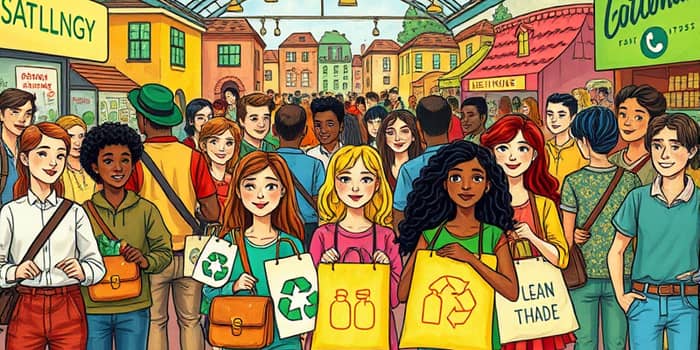
Every time you open your wallet, you hold the power to shape the future. Ethical spending transforms simple purchases into profound acts of advocacy for a better world.
It moves beyond mere transactions to consider the ripple effects of each buy. Your choices can drive positive change across industries and communities, creating a legacy of responsibility.
This movement is sweeping the globe, no longer a niche trend but a mainstream force. Millions are embracing conscious consumerism as a way to align their values with their daily lives.
Imagine a world where your spending supports fair wages, protects ecosystems, and builds resilient communities. That world is within reach, starting with the decisions you make today.
What is Ethical Consumerism?
Ethical consumerism, often called conscious consumerism, is the practice of making purchasing decisions based on social and environmental responsibility. It goes beyond personal benefit to examine the full lifecycle of products.
Unlike traditional shopping focused on cost and convenience, ethical consumption delves into labor rights, ecological balance, and community impact. This approach functions as political activism, where consumers vote with their wallets to demand better standards.
It’s about asking critical questions before buying: Who made this? What are the environmental costs? Does this align with my values?
Why Ethical Spending Matters More Than Ever
The environmental challenges we face are unprecedented, from climate change to massive waste accumulation. Ethical consumption reduces harmful footprints by promoting sustainable production and reducing landfill contributions.
Socially, it advocates for human dignity, ensuring fair labor practices and transparency in supply chains. Businesses are pressured to improve conditions and adopt ethical standards, fostering a more just economy.
Economically, it drives innovation toward circular models and supports local enterprises. Collective consumer power drives systemic change, reshaping markets to prioritize people and planet over profit alone.
- Environmental Impact: Reduces greenhouse gas emissions and conserves biodiversity.
- Social Impact: Ensures safe working environments and fair wages globally.
- Economic Impact: Encourages sustainable business practices and community investment.
Statistics reveal a growing shift: ethical consumerism reached £47.2 billion in the UK by 2012, and in 2024, 64% of people spent with socially responsible businesses.
A Historical Perspective
The concept of "dollar voting" was introduced in 1989, marking the organized beginning of ethical consumerism. It has evolved from a fringe idea to a widespread movement embraced by all demographics.
Events like the COVID-19 pandemic accelerated this trend, as people sought more meaningful ways to consume. Research shows that perceived pandemic severity increases intentions to consume ethically.
Today, it spans all income levels, debunking myths that it’s only for the wealthy. This evolution signals a cultural shift toward values-driven economies.
What Motivates Ethical Consumers?
Growing awareness of global issues, such as climate crises and social inequalities, drives many to adopt ethical spending habits. Social media amplifies corporate scandals, eroding trust in traditional brands and highlighting the need for accountability.
Generations like Millennials and Gen Z are at the forefront, prioritizing values in their purchases and influencing market trends. They demand transparency and authenticity from companies, refusing to support unethical practices.
- Increasing concern for environmental degradation and resource depletion.
- Desire for social justice, equity, and human rights in global supply chains.
- Loss of trust in corporations due to high-profile scandals and greenwashing.
- Influence of peer networks and community movements advocating for change.
Data shows that 81% of Gen Z consumers have changed purchasing decisions based on brand actions, and 62% prefer sustainable brands.
Debunking the Affordability Myth
A common misconception is that ethical spending is only for the wealthy, but this is far from true. In reality, it is accessible to all through practical, budget-friendly strategies that anyone can adopt.
Secondhand shopping, buying seasonal produce, and learning basic repairs can save money while reducing waste. Low-income communities often practice sustainability out of necessity, such as by sharing resources or avoiding disposable items.
- Shop at thrift stores or online platforms for re-owned items, with 75% of US consumers willing to do so.
- Buy local and seasonal produce to support farmers and reduce transportation costs.
- Repair and reuse items to extend their lifespan, minimizing overall consumption.
- Adopt a cost-per-wear approach for clothing, where a €60 ethically-made sweater worn 100 times costs €0.60 per wear.
About 55% of people are willing to pay more for eco-friendly brands, but many ethical practices actually save money in the long run.
Practical Applications and Campaigns
History is filled with examples where consumer campaigns led to monumental changes. Success stories like dolphin-free tuna demonstrate how collective action can protect wildlife and shift industry norms.
Fair-trade coffee and cruelty-free cosmetics have become mainstream, showing that ethical choices can scale. These movements inspire ongoing efforts to improve standards in fashion, food, and technology.
- Dolphin-free tuna initiatives reduced bycatch and promoted marine conservation.
- Fair-trade coffee ensured better wages and conditions for farmers in developing countries.
- Cosmetics free from animal testing spurred innovation in ethical beauty products.
These campaigns prove that when consumers unite, they can challenge giants and win, paving the way for a more responsible marketplace.
Overcoming Greenwashing and the Behavioral Gap
Greenwashing, where companies make false or exaggerated environmental claims, is a significant barrier. Consumers must seek third-party certifications like B Corp or Fair Trade to verify authenticity and avoid deception.
The behavioral gap—where intentions don’t translate into actions—can hinder progress. Setting small, achievable goals helps bridge this gap, such as starting with one product category or making gradual swaps.
- Look for recognized certifications rather than vague marketing terms like "green" or "natural".
- Research brands thoroughly, checking their sustainability reports and labor practices.
- Start with accessible changes, like switching to reusable bags or buying from local markets.
- Join online communities or apps that rate companies on ethical criteria for guidance.
With 40% of environmental claims affected by greenwashing, vigilance is key to ensuring your spending truly makes a difference.
Guiding Lights for Ethical Spending
Core principles provide a reliable framework for navigating ethical decisions. These include reducing waste and supporting fair trade to create a balanced, impactful approach to consumption.
- Reduce waste by choosing products with minimal packaging and supporting recycling initiatives.
- Support fair trade principles, ensuring safe working environments, fair wages, and no exploitation.
- Demand transparency in sourcing, production, and labor practices from all companies.
- Prioritize local and small businesses to strengthen communities and reduce ecological footprints.
By adhering to these principles, you can make consistent, meaningful choices that contribute to a healthier world.
Asking the Right Questions
In 2026, consumers are becoming more inquisitive and empowered. They ask where products come from and who made them, seeking full alignment with personal values before purchasing.
This shift transforms consumers into stakeholders, expecting control, transparency, and personalized experiences from brands. Ethical spending becomes a dialogue that fosters trust and drives continuous improvement in corporate behavior.
Shoppers now prioritize questions like: What’s the real cost? Does this reflect my ethics? How can I contribute positively?
How Your Choices Shape the Market
Individual actions, when multiplied by millions, create powerful collective effects. Millions of ethical purchases can reshape entire industries, pushing companies to adopt sustainable and fair practices to retain customers.
This movement heralds a new era of consumerism, where responsibility is paramount. Companies are increasingly integrating ethical standards to build loyal bases, proving that values and profitability can coexist.
By choosing ethically, you join a global community driving toward a future where commerce serves humanity and the environment.
Your Wallet, Your World
Embracing ethical spending is a journey of mindful consumption that starts with awareness and grows with action. Every purchase is an opportunity to vote for a better future, one that values people and planet equally.
Begin by educating yourself, making small changes, and celebrating progress. Together, we can align our wallets with our world, creating a legacy of positive change that resonates for generations to come. Your spending power is a tool—use it wisely to build the world you believe in.
References
- https://www.thegreenshot.io/uncategorized/ethical-consumerism/
- https://etedge-insights.com/featured-insights/the-rise-of-ethical-consumption-a-new-era-of-consumerism/
- https://www.firmeu.com/blog/consumer-spending-trends-2026
- https://www.success.com/what-is-ethical-consumerism
- https://www.maersk.com/insights/growth/2022/11/03/gen-z-buyers-the-future-is-ethical-consumption
- https://www.thomsonreuters.com/en-us/posts/human-rights-crimes/gen-z-purchasing-power/
- https://nielseniq.com/global/en/insights/report/2025/consumer-outlook-guide-to-2026/
- https://theroundup.org/environmentally-conscious-consumer-statistics/