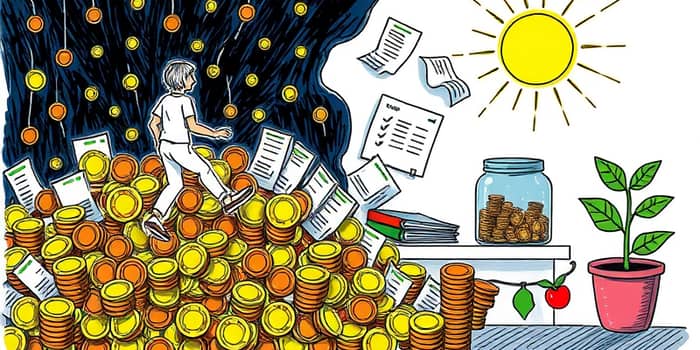
As we step into 2026, a wave of financial uncertainty grips many Americans, with surveys revealing a deep sense of overwhelm.
Persistent inflation and stagnant incomes have fueled this anxiety, making it a critical moment for reflection.
Despite this, there is a silver lining, as more people are determined to reclaim control and build a brighter future.
The Current Landscape of Financial Pessimism
Recent data shows that 32% of Americans expect their personal finances to worsen in 2026, marking the highest level since 2018.
This pessimism stems from ongoing economic pressures that feel insurmountable to many.
Key factors contributing to this sentiment include:
- Inflation, cited by 78% of pessimists, with prices up about 25% since 2020.
- Political uncertainty, mentioned by 55% of those worried about their finances.
- Stagnant or reduced income, a concern for 46% of individuals.
- High debt levels, highlighted by 25% of respondents as a major stressor.
These elements create a perfect storm of financial strain, leaving people feeling trapped.
Over half of Americans report increased financial stress in the past year alone.
Money has become the primary life stressor for 61% of people, overshadowing other daily worries.
This overwhelming sentiment is not uniform across demographics, as shown in the table below.
Understanding these differences can help tailor personal financial strategies for better outcomes.
The Burden of Debt and Economic Pressures
Household debt in the U.S. has reached a record $18.33 trillion, with an average of $104,755 per consumer.
Credit card balances at high APRs exacerbate this issue, affecting 46% of Americans.
This debt is unlikely to lighten in 2026, adding to the financial overwhelm.
Other pressures include stagnant median household income since 2019.
Approximately 25% of households live paycheck-to-paycheck, limiting their ability to save.
Only 31% are considered "financially healthy" as of spring 2025, highlighting the need for change.
To combat this, many are turning to actionable goals, as listed below.
- Pay down debt, a top goal for 19-20% of Americans, especially with age.
- Increase savings or build an emergency fund, targeted by 13-21% of people.
- Boost income through higher-paying jobs or additional sources, a priority for 14-15%.
- Budget better and practice mindful spending, adopted by 12% to curb impulses.
- Other goals include no specific plans for 10%, often among older adults.
These resolutions signal a shift from passive worry to active management.
Shifting Mindsets from Stress to Proactive Ownership
Despite the challenges, 76% of Americans in some surveys feel confident their finances will improve.
This optimism is fueled by a growing emphasis on taking ownership of financial health.
People are moving beyond mere resolutions to implement concrete strategies.
For instance, 44% address their financial goals immediately as a New Year's resolution.
Another 35% plan carefully before acting, ensuring their steps are well-thought-out.
This proactive approach is essential for turning overwhelm into control.
Creative tactics, often called "financial gymnastics," are gaining popularity.
- 58% prioritize joy and hobbies, with 39% opting for frugal weekdays to enjoy weekends.
- Value-based spending over strict restriction helps maintain balance and motivation.
- Cutting "little treat culture" reduces unnecessary expenses without sacrificing happiness.
- 57% plan risky moves, such as investing in crypto or starting a business.
- 46% use credit rewards strategically to offset costs and build savings.
These methods foster a sense of empowerment and personal agency.
Practical Steps to Achieve Financial Ownership
To transition from overwhelm to ownership, start with fundamental actions that build momentum.
Focus on debt reduction first, as it frees up resources for other goals.
Experts recommend targeting high-APR credit card debt, which is particularly costly.
Next, establish an emergency fund with at least $1,000 to cover unexpected expenses.
Aim to save three to six months' worth of expenses over time for greater security.
Mindful spending involves tracking purchases and aligning them with long-term values.
Implementation timelines vary, but consistency is key to success.
- 44% take immediate action, embracing the momentum of a new year.
- 35% engage in thorough planning to avoid past mistakes and regrets.
- 12% conduct research to inform their decisions, ensuring they are data-driven.
- 9% remain unsure, highlighting the need for community support and guidance.
Automated savings tools can simplify this process, making it easier to stay on track.
Year-round financial health checks help maintain progress and adapt to changes.
Embracing Optimism and Building Resilience
The broader trend shows that 62% of Americans are confident in facing a potential recession.
Similarly, 67% feel prepared against tariffs and other economic disruptions.
This resilience stems from a balanced mindset that values both financial prudence and personal joy.
By integrating strategies like those listed, individuals can move from anxiety to assurance.
- Adopt a "balanced" mindset, practiced by 43% to avoid extreme frugality or spending.
- Commit to mindful spending, as 49% do, to curb impulses that derail past efforts.
- Use automated tools for savings and investments to reduce manual effort and stress.
- Engage in value-based hobbies that provide fulfillment without breaking the budget.
- Regularly review financial goals to stay aligned with changing circumstances and priorities.
Ultimately, taking charge of your finances is about more than just numbers.
It is about reclaiming control and building a life of purpose and security.
From overwhelm to ownership, the journey is challenging but deeply rewarding.
With practical steps and a proactive spirit, anyone can navigate these turbulent times.
Embrace the shift, and let 2026 be the year you turn financial stress into lasting empowerment.
References
- https://www.bankrate.com/banking/financial-outlook-survey/
- https://www.intuit.com/blog/innovative-thinking/2026-financial-forecast-mindful-stress/
- https://www.nerdwallet.com/finance/studies/2026-consumer-outlook-report
- https://www.statista.com/statistics/1173591/opinion-personal-financial-situation-past-year-age-us/
- https://www.axios.com/sponsored/5-financial-trends-you-can-bank-on-in-2026
- https://www.experian.com/blogs/ask-experian/financial-trends-this-year/
- https://www.privatebank.bankofamerica.com/articles/2026-consumer-outlook.html
- https://www.youtube.com/watch?v=DBZ2LPjhV9o