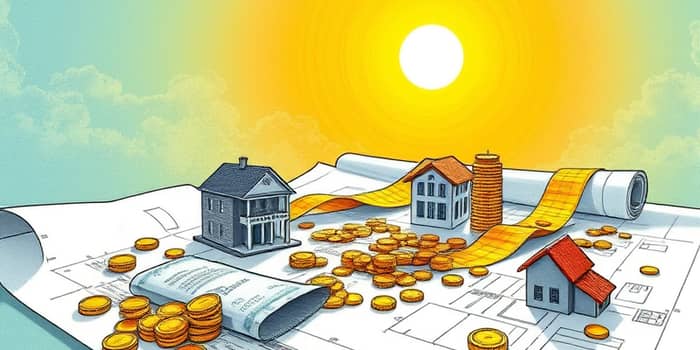
In a world where financial volatility can upend plans overnight, adopting a robust income security architecture design becomes more than a strategy—it is a blueprint for peace of mind. By architecting a portfolio specifically designed for sustainable passive income, you create a durable structure for financial security that stands firm amidst market turbulence.
Why Income Architecture Matters
Traditional growth investing focuses on long-term capital appreciation, often requiring the patience and tolerance for market swings. In contrast, income investing emphasizes steady cash flows like dividends, rent distributions, and interest payments that deliver tangible returns today. This present-oriented approach ensures that your everyday expenses can be covered, reducing the need to liquidate assets during downturns.
Building a robust income portfolio also separates your essential living costs from optional growth upside. Once your clearly defined after-tax income floor is established, you gain confidence and freedom to pursue new opportunities without jeopardizing your basic needs.
Core Assets for Your Income Blueprint
To assemble a resilient passive income foundation, it is essential to diversify across asset classes that provide reliable payouts. Each asset brings a unique risk and reward profile, and together they form the pillars of your income structure.
- Dividend-paying stocks from established companies.
- Government, corporate, and municipal bonds.
- Real estate investment trusts and direct rental properties.
- Preferred shares and business development companies.
- Cash equivalents such as CDs and money market funds.
By reinvesting distributions wisely, your passive streams can compound over time, strengthening the portfolio’s resilience while gradually increasing your income potential.
Crafting Your Sustainable Income Portfolio
Designing an income-focused portfolio requires a systematic process that aligns with your personal goals, timeline, and risk tolerance. Follow these key steps to lay a solid foundation.
- Define your goals and time horizon to balance between immediate needs and future growth.
- Assess the monthly or annual income required to cover both essentials and discretionary spending.
- Evaluate your risk tolerance to choose a conservative, balanced, or aggressive asset mix.
- Select diversified assets with strong fundamentals and a track record of consistent payouts.
- Optimize for tax efficiency using municipal bonds or retirement accounts to maximize net income.
- Implement the plan and rebalance regularly to maintain target allocations and income objectives.
Managing Risks and Ensuring Longevity
No investment strategy is without its challenges. Income-focused portfolios face potential hazards that investors must recognize and mitigate.
Interest rate fluctuations can erode bond values, while economic downturns may pressure dividend cuts or rental vacancies. Credit risk, inflation erosion, and market shifts all pose threats to your long-term sustainable passive returns. By diversifying across sectors, monitoring credit ratings, and maintaining a cash buffer for opportunities, you can navigate these risks with greater confidence.
Advanced techniques such as laddering bond maturities and using inflation-protected securities further bolster the portfolio’s resilience. Regular reviews ensure that each asset continues to meet performance and quality benchmarks.
Benefits and Ideal Audiences
When executed thoughtfully, an income architecture offers multiple benefits. It provides a reliable paycheck substitute without selling assets, shields essential spending from market swings, and enhances emotional well-being by reducing financial stress.
This approach appeals to retirees seeking predictable cash flow, high-income earners aiming to diversify away from equities, and anyone desiring a clear, reliable income stream. Whether you need to supplement your salary or fully replace it, designing with purpose yields peace of mind.
The Power of Reinvestment
Developing a habit of reinvesting distributions is one of the most potent tools in your arsenal. When you redirect dividends, interest, and rental proceeds back into the portfolio, you harness the full potential of compound growth and compounding dividends. Over years, this practice can double or triple original income levels, smoothing out performance across cycles.
By periodically adding fresh capital into underweighted segments, such as high-yield bonds during spread expansions or dividend growers in stable industries, you tilt returns in your favor while maintaining balance. This dynamic reinvestment approach ensures that your portfolio evolves with market conditions.
Tax Efficiency and Withdrawal Strategies
Designing a tax-efficient distribution plan is just as critical as selecting income assets. Consider tapping tax-sheltered accounts first, then taxable holdings with lower rates, and finally assets subject to higher ordinary income taxes. This sequence can preserve more after-tax cash, extending the life of your portfolio.
For those in retirement or semi-retirement, adopting a bucket strategy—dividing assets into short-term, medium-term, and long-term pools—can streamline withdrawals, reduce timing risk, and optimize tax outcomes. Such careful planning transforms the portfolio into a living system tailored to personal circumstances.
Real-World Case Study
Meet Sarah, a 58-year-old professional who needed to supplement her pension and Social Security income. By shifting 70% of her portfolio into a diversified income architecture—comprised of dividend ETFs, municipal bond ladders, and a small REIT sleeve—she achieved a 4% dividend yield, covering her essentials without tapping capital.
Over five years, Sarah reinvested excess income into undervalued segments during market dips, growing her annual cash flow by 25%. Her consistent execution and regular maintenance allowed her to maintain financial stability, even through volatile periods. Her story illustrates how disciplined strategies and perseverance deliver life-changing outcomes.
Emotional Rewards and Long-Term Impact
Beyond numbers, there is an emotional uplift in knowing that your daily coffee, mortgage payment, or charitable gift arises from reliable passive streams. This freedom fosters creativity, risk-taking in entrepreneurial ventures, or deeper engagement with personal passions. An income architecture is not merely financial—it is a catalyst for a fulfilling life.
When your core needs are secured, you can volunteer more, support causes, or invest in relationships rather than markets. This ripple effect extends your financial legacy into broader realms of purpose and impact.
Bringing It All Together
Crafting a sustainable passive income portfolio is akin to drafting a building blueprint that can weather storms. By combining well-chosen assets, rigorous planning, and ongoing maintenance, you create a financial fortress that supports your goals and adapts to change.
Remember, the power of income architecture lies not only in the dividends, interest, and rent checks but in the enduring confidence of knowing your core needs are met. Begin building today, and let your portfolio stand as a testament to prudent design and persistent growth.
Whether you are taking your first steps or refining an existing structure, the principles of diversification, quality selection, and disciplined reinvestment will guide you toward sustainable passive returns that last a lifetime.
References
- https://saratogainvestmentcorp.com/articles/what-is-income-investing-overview-strategies-benefits/
- https://www.sofi.com/learn/content/income-investing-strategy/
- https://smartasset.com/investing/income-investment-strategies
- https://corporatefinanceinstitute.com/resources/career-map/sell-side/capital-markets/income-investing/
- https://www.palatinowealth.com/post/income-security-architecture
- https://waterloocap.com/fixed-income-strategy-guide/
- https://www.empower.com/the-currency/money/what-is-income-investing
- https://www.vaneck.com/us/en/blogs/income-investing/income-investing-playbook/
- https://www.range.com/blog/advanced-strategies-mpt-tlh
- https://institutional.fidelity.com/app/literature/presentation/9887678/developing-an-effective-income-strategy.html