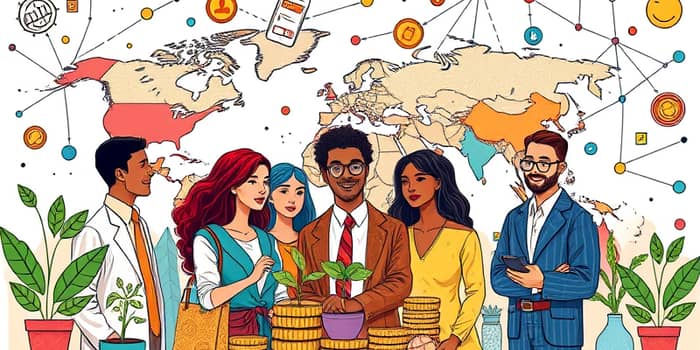
In a world where economic opportunity often hinges on access to capital, microfinance has emerged as a beacon of hope for millions. Providing financial services to the unbanked, it bridges the gap between aspiration and reality, empowering individuals to build better lives.
The global microfinance market, valued at US$224.6 billion in 2023, is on a rapid growth trajectory. Projections indicate it could reach US$506 billion by 2030, driven by a compound annual growth rate of 12.3%.
This expansion is not just about numbers; it represents a profound shift in how we approach poverty alleviation and entrepreneurship. Digital transformation and fintech innovations are key accelerators, making microfinance more accessible than ever before.
From rural farmers in Asia to urban artisans in Latin America, microfinance touches lives across the globe. Its core mission is to offer microloans, savings, and insurance without the need for collateral.
This breaks down traditional barriers to finance, enabling even the most marginalized to participate in economic activities. The impact is tangible, with stories of small businesses flourishing and communities thriving.
However, challenges like technology adoption and regulatory hurdles persist, requiring ongoing innovation and support. As we delve deeper, the transformative power of microfinance becomes clear.
Market Overview and Projections
The microfinance sector is characterized by robust growth and diverse projections. Depending on the base year and scope, estimates vary significantly.
Recent reports from 2024 show higher valuations, reflecting post-COVID recovery and increased digital adoption. This resilience underscores the sector's importance in global economies.
Key segments include banks and non-banks, with banks expected to reach US$295.5 billion by 2030 at a CAGR of 13.2%. Service segments are dominated by micro-credit, which is the fastest-growing due to credit gaps and digital platforms.
End users are primarily individuals, accounting for about 79.6% share in 2024, with a focus on households, agriculture, and solo entrepreneurs. Small enterprises represent the fastest-growing segment, highlighting the role of microfinance in supporting business ventures.
- The global market was valued at US$224.6 billion in 2023 and projected to reach US$506 billion by 2030 at a CAGR of 12.3%.
- Alternative estimates include $234.86 billion in 2024 growing to $522.78 billion by 2032 at 10.8% CAGR.
- Another projection shows $271.06 billion in 2024 to $693.38 billion by 2033 at 11% CAGR.
These projections highlight the dynamic nature of the market, driven by evolving needs and technologies.
Historical and Current Scale
Microfinance has a rich history, with active borrowers growing since 2010. Today, it serves approximately 16 million low-income people through over 7,000 microfinance institutions in emerging economies.
The unbanked population continues to drive demand, with significant portions in rural areas and among women. Barriers such as cost and distance are being addressed through innovative solutions.
Microenterprises are a vital growth driver, often serving as mechanisms for economic progress. The MSME finance gap remains a challenge, but microfinance is stepping in to fill it.
- Active borrowers have been growing, with 2025 data covering 24,450 clients from 39 countries, representing 25 million borrowers.
- Unbanked populations are highest in regions with limited access to traditional banking, driven by factors like gender and location.
- Microenterprises benefit from access to capital, leveling the playing field for small businesses.
COVID-19 impacted the sector, causing financial difficulties for both large and small MFIs, but resilience and adaptation have led to recovery.
Key Drivers of Growth
Several factors propel the microfinance industry forward. Financial inclusion and poverty alleviation are at the heart of its mission, targeting those overlooked by conventional systems.
Entrepreneurship is surging, especially among youth and women in regions like Asia-Pacific and the Middle East. This is often necessity-driven due to job scarcity and lack of collateral.
Digital transformation is a game-changer, with mobile banking, fintech, AI, and blockchain enhancing credit access and rural equity. Mobile money has proven crucial during crises.
- Financial inclusion initiatives aimed at reducing poverty and empowering the unbanked.
- Entrepreneurship surge driven by youth and women seeking economic independence.
- Digital technologies like AI and blockchain improving access and efficiency.
- Supportive policies and regulations promoting microfinance as a tool for development.
- Focus on women entrepreneurs, enhancing gender equality and economic growth.
Government and regulatory support through policies for inclusion and Sustainable Development Goals (SDGs) foster a conducive environment.
Regional factors play a role, with Asia-Pacific dominating at a 42.5% share and China growing at 13.6% CAGR. Latin America shows fast growth via mobile and tech for rural and informal sectors.
Benefits, Principles, and Impacts
Microfinance operates on principles of accessibility and empowerment. It provides microloans, savings, and insurance without collateral, often through group lending models.
The benefits are multifaceted, including poverty alleviation, economic progress, SME growth, SDG achievement, and women empowerment. It unlocks capital for entrepreneurs, yielding social and economic returns.
- Alleviates poverty by providing financial tools to low-income individuals.
- Supports economic progress through entrepreneurship and small business growth.
- Empowers women, leading to improved gender equality and community development.
- Achieves Sustainable Development Goals by promoting inclusive growth.
- Offers hybrid models that balance profit and social impact.
However, drawbacks exist, such as challenges from COVID-19, tech adoption roadblocks, criticism of for-profit models, and gaps in SME financing.
Climate change also poses risks that need addressing, but strategies like diversification into microinsurance and savings can mitigate these issues.
Major Players and Competition
The microfinance market is fragmented, with key competitors including both global networks and local institutions. Top players have a strong presence, driving innovation and outreach.
Notable institutions include Accion International, Al Amana Microfinance, Bank Rakyat Indonesia (BRI), and BRAC International. These organizations leverage technology and partnerships to expand their reach.
- Accion International: A global leader in microfinance with a focus on innovation.
- Bank Rakyat Indonesia (BRI): One of the largest microfinance banks, serving millions.
- BRAC International: Known for its extensive network and impact in developing regions.
- Grameen Foundation: Pioneering group lending and women-centric models.
- CreditAccess Grameen Limited: Expanding digital services for enhanced accessibility.
Trends show increasing fintech collaborations, AI startups, and blockchain applications aimed at bridging SME financing gaps.
This competitive landscape fosters continuous improvement and service delivery, ensuring that microfinance remains responsive to evolving needs.
Emerging Topics and Trends
Technology integration is inevitable, with AI, big data, and blockchain transforming microfinance. These tools enhance credit scoring, reduce costs, and improve financial inclusion.
Sustainability is gaining focus, linking microfinance to climate change and SDGs. Hybrid models are evolving, balancing for-profit approaches with social missions.
- AI and big data for personalized financial services and risk assessment.
- Blockchain for transparent and secure transactions, reducing fraud.
- Mobile money expansion, especially in regions with low banking penetration.
- Climate-resilient microfinance products to address environmental challenges.
- Fintech partnerships that blend traditional MFIs with modern technology.
Rural focus remains critical, with efforts to ensure digital equity for families in remote areas. Risks include competition, delinquency, and regulatory changes.
By embracing innovation and collaboration, the microfinance sector can overcome these hurdles and continue to empower entrepreneurs worldwide. This journey is just beginning, with endless possibilities for growth and impact.
References
- https://www.fintechfutures.com/press-releases/global-microfinance-strategic-business-report-2024-market-to-reach-506-billion-by-2030-microenterprises-emerge-as-vital-driver-of-growth
- https://www.omrglobal.com/industry-reports/microfinance-market
- https://www.businesswire.com/news/home/20220323005748/en/Global-Microfinance-Market-Trajectory-Analytics-Report-2022-2026-Artificial-Intelligence-Poised-to-Transform-the-Future-of-Microfinance---ResearchAndMarkets.com
- https://www.fortunebusinessinsights.com/microfinance-market-113660
- https://www.technavio.com/report/microfinance-market-industry-analysis
- https://www.skyquestt.com/report/microfinance-market
- https://60decibels.com/insights/mfi-index/
- https://www.researchnester.com/reports/micro-lending-market/6295