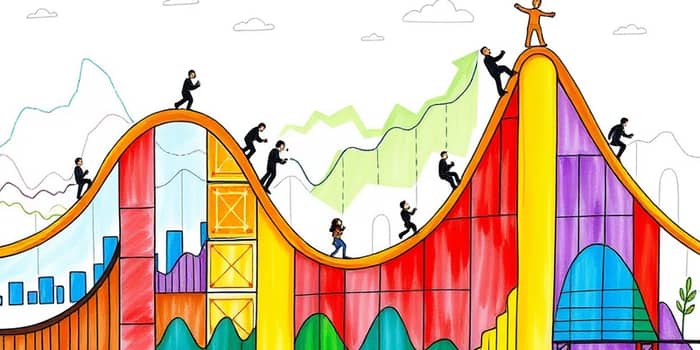
In a world of changing markets and shifting fortunes, understanding the rhythms of economic expansion and contraction is essential for businesses and individuals alike. By learning to anticipate each phase of the cycle, you can align your strategies to mitigate risks and capitalize on opportunities. This guide offers insight into the nature of business cycles, the warning signs of inflection points, and actionable steps to strengthen your position through every twist and turn.
Understanding the Dynamics of Economic Cycles
The economic cycle describes the recurring pattern of growth and decline in an economy, moving through phases of expansion, peak, contraction, and trough. Each cycle reflects shifts in consumer spending, investment, employment, and production. While the sequence is predictable, the timing and magnitude of each phase are influenced by countless variables—from monetary policy adjustments to global events.
Familiarity with these patterns equips decision makers to chart courses through uncertainty. Rather than reacting to market swings, anticipate turning points and adjust plans to preserve momentum in good times and protect resources in lean periods.
The Four Phases of the Economic Cycle
A concise overview can help frame the details of each stage. The table below outlines the key characteristics of expansion, peak, contraction, and trough.
Expansion: Riding the Growth Wave
During the expansion phase, businesses and consumers embrace optimism. Real GDP climbs, employment surges, and credit becomes more accessible. Companies can secure financing for projects, hire new talent, and scale operations. Consumers increase spending on goods and services, further fueling growth.
For entrepreneurs, this is the time to pursue measured investment in technology and infrastructure, strengthening foundations before the next slowdown. However, rushing expansion without clear planning can lead to inefficiencies and debt burdens when conditions shift.
Peak: Recognizing the Summit
At the peak, economic output reaches its zenith. Employment levels are high and consumer demand remains robust, but warning signs begin to emerge. Inflation accelerates, input costs rise, and interest rates may climb to temper borrowing.
Business leaders should monitor margin pressures and market saturation. Implementing strategic adjustments to manage rising costs will cushion the impact as activity slows. Conserving cash and reviewing debt obligations during this phase can set the stage for greater resilience.
Contraction: Weathering the Downturn
Contraction, often marked by two consecutive quarters of falling real GDP, brings renewed caution. Sales decline, inventories build, and unemployment grows. Credit conditions tighten as lenders reassess risk.
Employers may freeze hiring, reduce hours, or restructure operations to preserve capital. Employees should focus on upskilling and diversifying income sources to remain competitive. Proactive cost controls and flexible budgets help organizations maintain stability through this challenging period.
Trough: Preparing for the Next Ascent
The trough is the cycle’s low point, where negative growth gives way to stabilization. Confidence remains fragile, but early indicators of recovery appear—consumer sentiment improves and demand slowly returns.
Forward-looking enterprises use this lull to streamline processes, launch new initiatives, and explore alternative markets. Those who embrace innovation and adaptability ahead of peers often capture outsized gains as expansion resumes.
Key Indicators to Watch
Staying alert to economic signals provides an edge in timing decisions. Important metrics include:
- Real gross domestic product (GDP) growth rates
- Unemployment and labor force participation
- Consumer spending and retail sales figures
- Industrial production and capacity utilization
- Inflation rates and central bank policy changes
Strategies for Businesses and Individuals
Whether you run a startup, lead an established company, or manage personal finances, these tactics can help you navigate each cycle stage:
- Build and maintain an emergency fund or cash buffer
- Diversify revenue streams and investment portfolios
- Lock in favorable financing terms during expansion
- Monitor leading indicators to adjust plans proactively
- Emphasize core strengths in less volatile sectors
Building Long-Term Resilience
True preparedness extends beyond reactive measures. Cultivate a culture of continuous learning and scenario planning. Regularly review risk exposures, supply chain vulnerabilities, and cost structures. Engaging teams in solution-driven discussions ensures agility when surprises occur.
Leadership that communicates transparently, fosters collaboration, and rewards smart risk-taking builds trust. Over time, these practices translate into sustained performance through fluctuating markets and a reputation for reliability among stakeholders.
Conclusion
Economic cycles are an inevitable feature of any market-driven system. By comprehending the distinct phases—expansion, peak, contraction, and trough—you gain the foresight to align strategies with evolving conditions. Focus on strengthening fundamentals, maintaining flexibility, and watching key indicators.
With a proactive mindset and robust planning, both businesses and individuals can transform cyclical challenges into opportunities for innovation and growth. Embrace the journey of the business cycle, and you will be positioned to thrive on every rise and navigate every downturn with confidence.
References
- https://www.fe.training/free-resources/asset-management/stages-of-the-economic-cycle/
- https://caringfranchise.com/blog/effect-of-economic-cycles/
- https://www.guidantfinancial.com/blog/business-cycles/
- https://www.sofi.com/learn/content/what-is-the-business-cycle/
- https://corporatefinanceinstitute.com/resources/economics/economic-cycle/
- https://www.frbsf.org/research-and-insights/publications/doctor-econ/2002/05/business-cycles-economy/
- https://courses.lumenlearning.com/clinton-introbusinesswmopen/chapter/reading-the-business-cycle-definition-and-phases/
- https://www.jpmorganchase.com/institute/all-topics/business-growth-and-entrepreneurship/when-opportunity-knocks-how-economic-cycles-shape-entrepreneurial-ventures-and-their-success
- https://institutional.fidelity.com/app/item/RD_13569_40890/business-cycle-update.html
- https://privatebank.jpmorgan.com/nam/en/insights/markets-and-investing/why-this-economic-cycle-is-defying-history-and-breaking-the-rules
- https://www.youtube.com/watch?v=fU9J7isVGAc
- https://www.richmondfed.org/publications/research/economic_brief/2025/eb_25-37
- https://www.stlouisfed.org/publications/page-one-economics/2023/03/01/all-about-the-business-cycle-where-do-recessions-come-from
- https://www.congress.gov/crs-product/IF10411
- https://analystprep.com/cfa-level-1-exam/economics/business-cycle-and-its-phases-2/