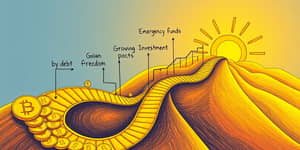
As Americans navigate an evolving financial horizon, retirement planning in 2026 demands a blend of heartfelt vision and concrete action. Rising life expectancy, shifting tax laws, and demographic peaks challenge us to rethink how we prepare for life’s next chapter.
Understanding the Retirement Landscape in 2026
In 2026, retirement expectations have soared. Surveys reveal that Americans believe they need an average of $823,800 to retire comfortably, a dramatic jump from last year’s $580,310. At the same time, a historic demographic milestone unfolds: 11,400 Americans turn 65 every single day.
Financial sentiment remains largely positive—an overall Net Sentiment Index of +74. Yet beneath this optimism lurk concerns. Nearly 41% cite retirement planning uncertainty as their chief economic worry, while 32% have felt the sting of account volatility. Even with 88% expressing confidence in strategic, long-horizon investing, conversion from faith to firm steps often lags.
Emotional Readiness Meets Financial Security
Beyond balance sheets and tax codes, retirement planning is an emotional journey. Many feel unprepared even when year-end statements look healthy. Studies show 1 in 4 Americans believe they won’t be able to retire, while half of households have scant savings.
Bridging this emotional gap requires recognizing both hopes and fears. While 70% of retired people without formal plans report living comfortably, the prospect of outliving savings weighs on 51%. Rising healthcare and long-term care costs worry 66–80%, and Social Security’s future troubles concern 87% of adults.
- Embrace realistic projections for longevity and health expenses.
- Reframe volatility as opportunity through disciplined contributions.
- Build small wins: celebrate each dollar saved toward your future.
Key Trends Shaping Retirement Strategies
Emerging trends in 2026 are rewriting retirement rulebooks. Employers fine-tune plan designs to boost participation, SECURE 2.0 provisions permit penalty-free emergency withdrawals of up to $1,000 annually, and in-plan Roth conversions gain traction.
To illustrate these shifts, consider the following table of major trends and their impacts:
Practical Steps for a Secure Retirement
Charting a clear path often begins with simple, repeatable actions. Integrating these into your routine can transform intentions into lasting habits.
- Max out 2025 contributions to IRAs and 401(k)s before deadlines.
- Review your RMD strategy: timing, Qualified Charitable Distributions, and tax impacts.
- Rebalance portfolios to align risk with your time horizon and goals.
- Execute early tax planning: Roth conversions, capital loss harvesting, and leveraging the new senior deduction.
- Refine withdrawal strategies: adopt a safe withdrawal rate of 3.9% and adjust for inflation.
- Shop long-term care options or hybrid policies to mitigate healthcare cost exposures.
Consistent review and adjustment ensure you stay on track as markets and personal circumstances evolve.
Managing Risks and Planning for the Unexpected
Every retirement plan must account for uncertainty. Whether it’s market turbulence, evolving tax rules, or unplanned medical expenses, resilience is key.
- Maintain an emergency fund for 6–12 months of expenses; leverage penalty-free emergency 401(k) penalty-free withdrawals if needed.
- Lock in lifetime income through annuities or in-plan guaranteed income options.
- Protect against inflation by diversifying into equities, TIPS, and alternative assets.
- Plan for longevity: consider solutions for women who statistically outlive partners.
By stressing your strategy against worst-case scenarios, you cultivate confidence in your path forward.
Looking Ahead: Embracing Opportunity in 2026 and Beyond
The retirement sphere of 2026 offers more tools and innovations than ever. New tax credits, expanded deduction caps, and plan features like student loan matching open fresh avenues for wealth building.
Moreover, industry momentum toward in-plan income, managed accounts, and fiduciary outsourcing signals a future where retirees can focus on life’s joys—and let specialists handle complexity.
Ultimately, a fulfilling retirement hinges on marrying emotional clarity with disciplined action. By setting realistic goals, harnessing new plan features, and embracing lifelong learning, you transform retirement from an endpoint into an ongoing, vibrant chapter.
As you move forward, remember that planning is not a one-time event—it’s a dynamic, ever-evolving process. The seeds you plant today, be they dollar contributions or habit changes, will grow into the financial security and fulfilling experiences you deserve tomorrow.
References
- https://www.biobrain.io/blog/america-is-seeing-rising-retirement-planning-signals-in-2026
- https://whzwealth.com/blog/2026-retirement-planning-checklist-8-things-to-do-before-spring
- https://www.adp.com/spark/articles/2026/01/a-fresh-take-on-retirement-plans-8-trends-in-2026.aspx
- https://www.fidelity.com/learning-center/personal-finance/retirement/2026-money-moves
- https://twowestadvisors.com/survey-findings-six-key-trends-for-2026/
- https://www.morningstar.com/retirement/6-retirement-must-knows-2026
- https://www.athene.com/2026-retirement-outlook
- https://www.getamplifylife.com/learn/blog/industry-insights/retirement-statistics
- https://www.nerdwallet.com/retirement/learn/retirement-planning-an-introduction
- https://www.troweprice.com/en/us/insights/retirement-market-outlook
- https://subscribe.kiplinger.com/servlet/ConvertibleGateway?cds_mag_code=KPC&cds_page_id=276264
- https://www.morningstar.com/business/insights/research/the-state-of-retirement-income
- https://www.aon.com/en/insights/articles/retirement-plan-compliance-strategies-to-make-2026-easier
- https://worldatwork.org/publications/workspan-daily/5-trends-will-shake-up-the-retirement-industry-in-2026