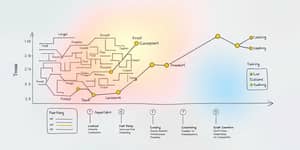
Imagine having a crystal ball that reveals not just market prices, but the very emotions driving them.
Market sentiment analysis offers exactly that—a window into the collective psychological state of investors.
By tapping into this powerful tool, you can navigate financial markets with greater confidence and foresight.
In today's fast-paced world, understanding the market's mood is no longer a luxury; it's a necessity for anyone looking to thrive.
This article will guide you through the essentials of sentiment analysis, from basic concepts to advanced strategies.
Understanding Market Sentiment
At its core, market sentiment measures the overall attitudes and opinions of investors towards securities or the market.
It is driven by emotions like fear, greed, and uncertainty, shaping trends before fundamentals catch up.
Recognizing whether the crowd is optimistic or pessimistic can provide early warnings of potential reversals.
This insight allows you to act proactively, rather than reacting to price movements alone.
Sentiment often acts as a contrarian indicator, meaning extremes can signal turning points.
For instance, when everyone is overly bullish, it might be time to prepare for a downturn.
Key Indicators to Watch
Several quantitative tools help gauge market sentiment in real-time.
These indicators offer snapshots of investor behavior and expectations.
- Put-call ratio: A high ratio indicates bearish sentiment, as more traders bet on declines.
- Volatility indices (e.g., VIX): Rising levels signal increasing anxiety and market fear.
- COT Report: Tracks positions of large players in futures markets for institutional insights.
Survey-based indicators add a human touch to the data.
- AAII Sentiment Survey: Polls individual investors weekly to measure bullish or bearish views.
- This soft data complements hard numbers, providing a fuller picture of market mood.
Composite indices like the CNN Fear & Greed Index aggregate multiple factors for a holistic view.
It scales from 0 (extreme fear) to 100 (extreme greed), helping identify neutral zones.
Advanced Techniques in Sentiment Analysis
Modern approaches leverage technology to dive deeper into sentiment.
Natural Language Processing (NLP) classifies text from news or social media as positive, negative, or neutral.
This allows for real-time analysis of buzz around specific stocks or events.
- Aspect-based analysis: Focuses on sentiment towards entities like companies or sectors.
- Topic modeling: Identifies emerging themes that could influence market narratives.
- Sentiment scoring: Assigns numerical values to opinions for easy aggregation and tracking.
AI and machine learning enhance accuracy by handling nuances like sarcasm or irony.
These advanced methods integrate with technical and fundamental data for robust forecasts.
Practical Applications for Traders and Investors
Sentiment analysis isn't just theoretical—it has direct applications in trading and portfolio management.
By spotting divergences between sentiment and price, you can anticipate trend reversals.
This provides an edge in timing entries or exits based on market hype or fear.
- Use sentiment to identify overhyped sectors for potential short opportunities.
- Monitor social media chatter for early signals on stock momentum, like during Tesla rallies.
- Incorporate sentiment into algorithmic trading models to improve risk management.
For portfolio construction, sentiment helps gauge risk appetite and exploit market imbalances.
It can also aid in detecting inflection points, such as when pessimism peaks indicating a bottom.
Building Your Sentiment Analysis Toolbox
To harness sentiment effectively, you need the right data sources and tools.
Unstructured data from social media, news, and forums offers rich insights into public opinion.
- Platforms like X (Twitter) and Reddit provide real-time sentiment shifts from retail investors.
- Google Trends can reveal search interest spikes that correlate with market movements.
Structured data includes surveys and economic reports that add context to sentiment readings.
Technologies such as NLP and AI are essential for processing this big data efficiently.
Tools like RavenPack or ExtractAlpha offer specialized solutions for sentiment tracking.
Continuous monitoring is crucial, as sentiment can shift rapidly with news or geopolitical events.
Weighing the Pros and Cons
Like any tool, sentiment analysis has its strengths and limitations.
On the benefits side, it provides a real-time edge over lagging indicators like price or fundamentals.
By quantifying narratives and crowding, it enhances predictions for volatility and liquidity.
This makes it invaluable for improving model accuracy in forecasting market moves.
- Early detection of market exhaustion through sentiment shifts.
- Opportunities to exploit alpha from diverse, non-interchangeable signals.
However, sentiment data is not standalone and can be noisy or subjective.
AI helps mitigate issues like sarcasm, but statistical testing is needed to avoid overreaction.
Always combine sentiment with other analyses for a holistic approach to decision-making.
Embrace sentiment as part of a broader toolkit to navigate the markets with insight and agility.
References
- https://www.strike.money/technical-analysis/sentiment-analysis
- https://insight7.io/market-sentiment-analysis-complete-guide/
- https://www.cmcmarkets.com/en/technical-analysis/market-sentiment-analysis
- https://www.captrader.com/en/blog/sentiment-analysis/
- https://www.interactivebrokers.com/campus/ibkr-quant-news/sentiment-analysis-for-trading-part-i/
- https://extractalpha.com/2024/08/21/understanding-market-sentiment-with-nlp/
- https://corporatefinanceinstitute.com/resources/career-map/sell-side/capital-markets/market-sentiment/
- https://www.sfmagazine.com/articles/2023/june/five-approaches-to-sentiment-analysis
- https://empirica.io/blog/market-sentiment-analysis/
- https://getthematic.com/sentiment-analysis
- https://magnifi.com/learn/ai-stock-market-sentiment-analysis-trading-strategies
- https://www.ravenpack.com/blog/sentiment-explained
- https://aws.amazon.com/what-is/sentiment-analysis/