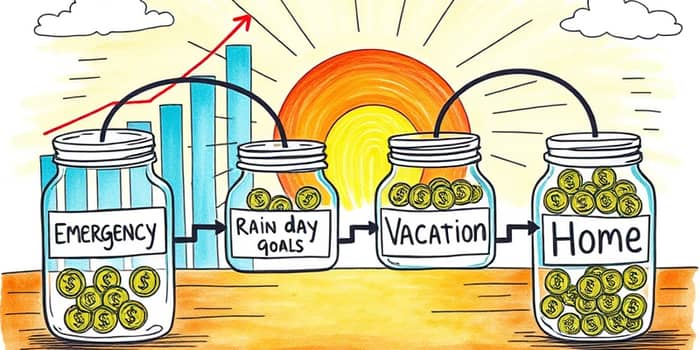
In an era where financial uncertainty seems ever-present, mastering the discipline of saving can transform stress into stability. Strategic saving goes beyond stashing cash for a sudden expense—it involves crafting a system that secures short-term peace of mind, medium-term achievements, and long-term prosperity. By aligning habits with clear objectives and leveraging automated tools, you can cultivate a resilient financial foundation tailored to life's unpredictable journey. This article explores the principles, tactics, and real-world examples that will empower you to become a deliberate, lifelong saver.
Beyond the Rainy Day Fund: Redefining Savings
At its simplest, a rainy day fund refers to a smaller cushion for minor surprises, typically ranging from a few hundred to a few thousand dollars. This reserve covers unexpected car repairs, minor appliance fixes, or last-minute travel obligations without disrupting your broader objectives.
In contrast, an emergency fund is a more substantial safety net, often equating to three to six months of essential living expenses. For younger earners or those on tight budgets, three months may suffice; higher-income households or individuals approaching retirement might target up to a year’s worth of costs. These funds should reside in low-risk, easily accessible vehicles such as savings or money market accounts.
A general savings account serves planned goals like a vacation, home down payment, or a special celebration. Accounts here may vary in vehicles—from standard savings to certificates of deposit—depending on your timeline and risk tolerance. The key is to define each account's purpose clearly.
Differentiating Purpose: Why Multiple Accounts Matter
When protect goals from derailment, the last thing you want is using your vacation fund for an emergency repair. Separating funds into multiple pools—emergency, rainy day, and goal-specific—is essential for tracking balances and maintaining discipline. This tiered approach ensures one need doesn't cannibalize another.
Creating clarity around each bucket also fosters accountability. Assign a target amount, set a deadline, and monitor progress with regular check-ins. Over time, this structure cultivates confidence, knowing you have the right resources reserved for each life event.
Systematic Savings Plans: Building Discipline
To anchor saving as a habit, you must treat savings like a bill. Automating predictable transfers creates consistency and removes the temptation to postpone contributions. Whether it’s a direct payroll deduction into your retirement account or a standing order to your savings, automation is the cornerstone of steady progress.
Coupled with regularity, compound interest accelerates your long-term growth. By contributing fixed amounts at set intervals, you harness dollar-cost averaging for investments and exponential accumulation through frequent interest compounding. The earlier and more consistently you save, the more powerful this effect becomes.
- Define a clear, measurable goal
- Set a realistic timeline or horizon
- Automate transfers on each payday
Practical Strategies and Essential Tools
Modern banking platforms and employers offer multiple avenues to streamline saving. You can split direct deposit across several accounts, or schedule recurring transfers through your online portal. Additionally, leverage employer matching contributions as free money by maximizing 401(k) or similar plans to capture every available dollar of benefit.
For personal allocations, use separate accounts or sub-accounts to ensure separate tracking for each goal. Mobile apps, budgeting spreadsheets, or dedicated software can send alerts when targets are met or when contributions slip, keeping you accountable.
- Automate contributions to multiple accounts
- Utilize budgeting rules like 50/30/20
- Monitor progress with smartphone apps
- Rebalance allocations as goals evolve
Applying Strategic Saving to Your Life Goals
Every stage of life carries unique objectives. In the short term, building a cash reserve and funding a dream vacation can reduce stress and enhance enjoyment. In the medium term, saving for a home purchase or financing education fosters growth and stability.
Long-term planning, especially for retirement, benefits most from incremental contributions with tax advantages. Whether through traditional or Roth accounts, small percentages added over decades can yield substantial balances thanks to compounding and market growth.
Consider these real-world examples:
If you save $500 per month for 12 months in a high-yield account at 4% APY, you accumulate roughly $6,150. Extending that discipline into retirement accounts, increasing contributions each year by just 1% of salary, compounds into life-changing sums over 30 years.
Avoiding Common Pitfalls and Maximizing Growth
Even the best plans falter when funds merge or discipline wanes. Always start small and scale gradually, particularly if income is variable. Hitting a small, achievable target builds momentum and confidence to increase contributions later.
Prioritize high-interest debt before diverting extra savings. Once you’ve tackled high-rate obligations, redirect those payments into your prioritized accounts. Periodically review rates on savings vehicles and migrate funds to higher-yield options as they become available.
Strategic saving is more than a financial strategy—it’s a mindset that aligns your daily decisions with your deepest ambitions. By defining clear goals, automating disciplines, and adjusting tactics over time, you’ll cultivate resilience against uncertainty and open doors to opportunity. Embrace this holistic approach and watch your financial well-being flourish, one purposeful deposit at a time.
References
- https://www.ameriprise.com/financial-goals-priorities/personal-finance/systematic-savings-plan
- https://ergobank.com/blog/post/emergency-fund-vs-savings-account-whats-the-difference
- https://www.thrivematching.com/smart-saving-strategies-tips-for-building-your-savings-fast/
- https://www.pbtc.net/blog/post/emergency-fund-vs-savings-account-what-s-the-difference-and-why-you-need-both
- https://swsfcu.org/blog/saving-strategies-for-multiple-financial-goals
- https://www.lfcu.org/news/managing-money-credit/savvy-saving-strategies-emergency-funds-vs-rainy-day-funds/
- https://www.bankrate.com/banking/savings/savings-strategies-for-different-goals/
- https://www.voyagefcu.org/articles/emergency-fund-vs-savings-whats-the-difference
- https://financialaid.uchicago.edu/undergraduate/managing-your-money/saving-and-setting-financial-goals/
- https://www.abbybank.com/resource-center/newsroom/blog/emergency-funds-vs-savings-account-what-is-the-difference
- https://www.strategicwg.com/resource-center/money/planning-saving-and-spending-over-a-lifetime
- https://www.ithinkfi.org/blog/blog-detail/ithink-blog/2025/10/01/understanding-emergency-funds---savings-accounts-in-2025
- https://www.vacu.org/learn/saving/10-savings-strategies
- https://www.alight.com/blog/how-emergency-fund-different-from-savings-account
- https://www.fidelity.com/learning-center/wealth-management-insights/four-keys-dynamic-spending-strategy