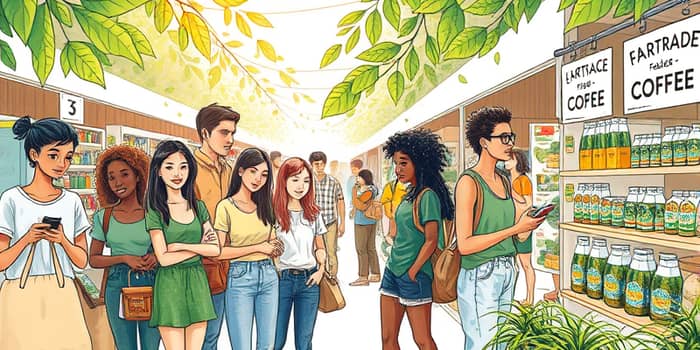
In a world of economic uncertainty and rising costs, each purchase we make carries more weight than ever. As consumers, we hold the power to shape industries, champion fairness, and spark systemic change—one dollar at a time.
Gen Z as the Ethical Force
Born between 1995 and 2012, Gen Z is already reshaping markets with unprecedented purchasing power. By 2030, this generation will represent 17% of U.S. retail spending, steering giants in apparel, tea, and coffee toward more sustainable, no-forced-labor practices.[1]
Studies reveal that 81% of Gen Z have changed purchases based on brand reputation, and 53% have actively joined boycotts, the highest rate of any demographic. Even with cost concerns ranking high, 80% are still willing to pay a premium for ethical goods—proof that values can outweigh a few extra cents at checkout.
Despite deep concern—80% cite forced labor in apparel and 60%+ in tea and coffee—less than half can name a specific offending brand. This transparency gap presents a powerful opportunity: when consumers demand clarity, brands must respond or risk being left behind.
Navigating Economic Headwinds in 2026
The cautious climate of 2026 is defined by a K-shaped recovery: higher-income households are spending more, while others tighten their belts. In the U.K., 49% of consumers are cutting discretionary spending, and 42% have postponed big-ticket purchases into Q1. Across the Atlantic, 79% of U.S. shoppers have altered their habits due to tariffs and inflation, hunting deals and embracing generics.
Yet even in this frugal landscape, ethical choices persist. Second-hand markets are booming—31% of 18–24-year-olds plan to buy more pre-loved goods in 2026. Food and beverage sectors see similar shifts: conscious drinkers will seek brands with transparent sourcing, willing to pay a bit extra to ensure no forced labor tainted their tea or coffee.
- Discretionary cuts reach 49% in the U.K., driving value-focused shopping.
- Higher-income spenders (+6% inflation-adjusted) bolster a divided recovery.
- 31% of young adults will buy more second-hand in 2026.
Amid rising economic pessimism—58% of U.K. consumers and 49% of Americans believe things will worsen—ethical consumerism can feel like a luxury. But each mindful purchase creates ripple effects, rewarding companies that lift labor standards and penalizing those that exploit vulnerable workers.
Practical Steps to Become an Ethical Spender
Turning ideals into action starts with simple, intentional habits. You don’t need a bottomless budget—just a plan and a commitment to research. Here are steps you can take today:
- Research brands before you buy: check certifications like Fair Trade or B Corp.
- Embrace the circular economy: shop second-hand, swap, or rent when possible.
- Support transparency: ask companies about their supply chains and labor practices.
- Ride out cost barriers: save a little extra for items you know are ethical.
- Use social platforms to spotlight fair brands, and hold others accountable.
By weaving these habits into your routine, you’ll align your spending with your values and influence the broader market. Brands notice shifting demand curves: when enough consumers vote with their wallets, entire supply chains are compelled to adapt.
Inspiring Impact Across Industries
Take the apparel sector: Gen Z’s second-hand embrace has forced giants to explore resale platforms and materials with lower environmental footprints. In coffee, consumer outcry over forced labor in harvesting has led roasters to invest in direct trade, ensuring farmers receive fair wages and transparent contracts.
Similarly, tea brands are tracing leaves back to the gardens where they’re grown, partnering with cooperatives that guarantee living wages. These shifts not only uplift producers but restore faith in commerce as a tool for good.
“Gen Z is emerging as a strong force in driving ethical consumerism, with their increasing purchasing power influencing industries to adopt more transparent and fair labor practices.”[1]
The Road Ahead: Sustaining Momentum
Economic forecasts predict modest consumption growth—2.6% in 2025 and 1.7% in 2026—yet consumers account for 70% of GDP. This underscores a simple truth: our collective choices set the pace of prosperity. When we prioritize ethics, we foster resilience, innovation, and community well-being, even amid uncertainty.
Imagine a future where your dollars not only bring you joy but also deliver justice. Each time you scan a barcode, you have a chance to vote for supply chains that respect human dignity. Together, we can turn everyday shopping into a powerful movement for change.
Start today: identify one product you buy regularly, research its sourcing, and choose an ethical alternative. Then share your discovery—because every story you tell amplifies impact.
By making conscious choices now, we ensure that in 2030 and beyond, the market is defined not by the cheapest price tag, but by its capacity to uplift people and planet. Be more than a spender. Be an advocate. Be the ethical spender this world needs.
References
- https://www.thomsonreuters.com/en-us/posts/human-rights-crimes/gen-z-purchasing-power/
- https://kpmg.com/uk/en/media/press-releases/2025/12/cautious-consumer-landscape-continues.html
- https://www.upside.com/business/retailer-blog/consumer-spending-trends-2026
- https://www.numerator.com/visions-consumer-trends/
- https://www.bernicke.com/2026-will-be-different-for-consumers-december-2025-market-update/
- https://www.fitchratings.com/research/corporate-finance/us-consumers-will-remain-resilient-despite-weakening-labor-market-14-01-2026
- https://libertystreeteconomics.newyorkfed.org/2026/02/a-new-dataset-for-consumer-spending-in-the-economic-heterogeneity-indicators/
- https://nielseniq.com/global/en/insights/analysis/2025/us-consumers-redefining-value-2026/