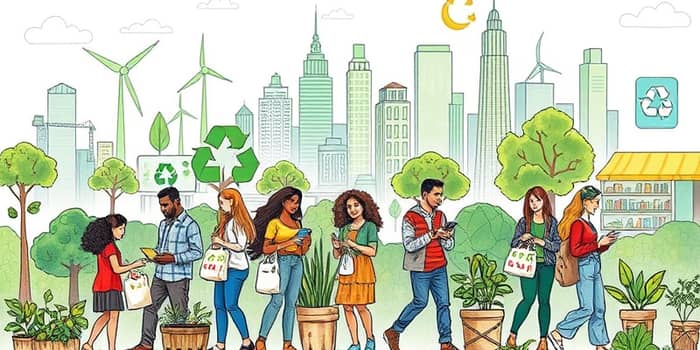
In today's world, every purchase we make is a vote for the kind of future we want to create. A responsible consumer is conscious of their habits, demanding positive societal and environmental impacts from producers and rewarding fair models through daily choices.
This movement integrates social, environmental, and ethical aspects into buying decisions, driving transformative change towards sustainability.
By embracing responsible consumption, we can enhance personal well-being and protect the planet. Informed consumers have the power to shape markets, making ethical choices a catalyst for better outcomes.
Understanding the Responsible Consumer
A responsible consumer is defined by their awareness and actions in daily life.
According to Ethical Consumer magazine, this profile is shaped by five key factors that guide ethical behavior.
- Reducing overall consumption to minimize waste.
- Being more active in making ethical choices during purchases.
- Prioritizing local products, services, and secondhand items.
- Banking ethically with institutions that support positive causes.
- Reusing, repairing, and recycling to extend product lifecycles.
These principles form the foundation of a lifestyle that values people and the planet over mere convenience.
The Urgency of Sustainable Choices in 2026
Consumers are increasingly shifting towards sustainability amid growing urgency over planetary health. 41% of U.S. adults believe the planet has reached its environmental tipping point, driving a move to eco-centric views that value all organisms.
This urgency is reflected in key concerns highlighted in recent trends.
- Circular economy awareness and implementation.
- Unregulated plastics and their environmental impact.
- Water availability and conservation efforts.
- Toxins in products and their health effects.
- Regenerative organics versus traditional organics.
These issues underscore the need for immediate action in consumer behavior.
Statistics on Willingness and Behavior
Global trends reveal a strong willingness to support sustainable products. 72% of global consumers are willing to pay more for items with sustainable credentials, with 34% more likely to buy them.
In the U.S., consumers are willing to pay an average of 12% more, while globally it's 9.7% more despite cost-of-living pressures.
- 78% of U.S. consumers feel better when buying sustainably produced products.
- 62% of people always or often seek sustainable items, up from 27% previously.
- 64% of global consumers are concerned about climate change, with 85% experiencing disruptions firsthand.
Generational differences are significant, with Gen Z and Millennials driving change. Younger generations are 27% more likely to buy from sustainable brands compared to older groups.
Drivers and Barriers to Ethical Purchases
Consumer behavior is influenced by various factors, including transparency and trust. 94% of consumers are loyal to transparent brands, highlighting the importance of openness in business practices.
Key drivers include environmental responsibility and waste reduction initiatives.
- 55% prioritize environmental responsibility in brand choice.
- 40% are more likely to buy from brands with waste reduction or recycling programs.
- 52% are influenced by a company's ESG actions in the U.S. sample.
However, barriers persist, with price being a major obstacle.
- 41% cite price as the primary barrier to sustainable purchases.
- 61% say sustainable items are too expensive, and 42% find them hard to locate.
- 28% struggle with unclear labeling, and 57% of Canadians are skeptical of green claims.
Understanding these dynamics helps in overcoming challenges to ethical consumption.
The Economic Power of Conscious Consumption
Consumer spending accounts for 60% of GDP in OECD countries, making it a powerful economic force. Behavior changes could cut 70% of global GHG emissions by 2050, demonstrating the massive environmental impact of our choices.
Globally, consumption is projected to grow significantly, with the U.S. at $16 trillion and China reaching $8.2 trillion by 2030.
ESG-claimed products drove 56% of growth in the last five years, 18% above expected, showing that sustainability offers competitive advantages for businesses.
Benefits for You and the Planet
Choosing ethically brings a multitude of benefits that extend beyond individual gain. Personal well-being improves, with 78% feeling better when making sustainable purchases, enhancing mental and physical health.
Societal and environmental rewards are substantial, including reduced emissions and support for fair production models.
- Health benefits from organics and reduced exposure to toxins and plastics.
- Environmental gains from cutting land use, water impact, and promoting circular economies.
- Business advantages like increased loyalty, with 94% staying with transparent brands.
- Broader impacts on combating climate change, economic instability, and social inequities.
By supporting local consumption, we reduce transportation emissions and bolster fair economic models in communities.
Steps to Become a More Responsible Consumer
Embracing responsible consumption is accessible through practical, daily actions. Start by assessing your current habits and making incremental changes.
Demand transparency from companies and use your purchasing power to advocate for ethical practices.
- Reduce consumption by buying only what you need and avoiding impulse purchases.
- Choose local and secondhand items to support community economies and reduce waste.
- Bank with ethical institutions that invest in sustainable and social causes.
- Reuse and repair products to extend their lifespan and minimize resource use.
- Recycle properly to ensure materials are repurposed effectively.
These steps empower individuals to contribute positively to global sustainability efforts.
Looking Ahead: The Future of Consumerism
The future holds promise with advancements in technology, regulations, and increased awareness. The circular economy is gaining traction, reducing waste through reuse and recycling initiatives.
Policy changes, such as green nudges and improved labeling, can help overcome barriers like price and accessibility.
Despite economic pressures, the green shift has sustained since 2021, indicating that ethical choices are becoming mainstream.
By continuing to prioritize responsible consumption, we can drive innovation, support regenerative practices, and create a more equitable world for generations to come.
References
- https://activesustainability.com/sustainable-development/responsible-consumption-benefits-local-consumption
- https://researchamericainc.com/research-america-inc-unveils-the-2026-sustainability-consumer-trends-report.php
- https://nmisolutions.com/research-reports/sustainability-reports/2026-sustainability-consumer-research-report/
- https://www.arbor.eco/blog/sustainability-statistics
- https://www.oecd.org/en/topics/sub-issues/sustainable-consumption.html
- https://theroundup.org/environmentally-conscious-consumer-statistics/
- https://www.weforum.org/stories/2019/09/why-responsible-consumption-is-everyone-s-business/
- https://www.repsol.com/en/energy-move-forward/energy/responsible-consumption/index.cshtml
- https://nielseniq.com/global/en/insights/report/2025/consumer-outlook-guide-to-2026/