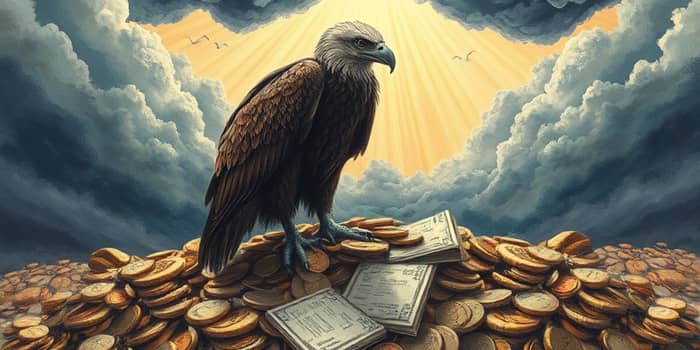
In the world of finance, few strategies spark as much controversy—and fascination—as vulture investing. Borrowing its name from the scavenging bird, this approach identifies broken enterprises or sovereign debts trading at fractions of their face value and turns them into profit opportunities. At its heart lies the art of buying distressed assets at deep discounts, positioning investors to capitalize when markets recover and fears subside.
Through strategic patience and relentless analysis, vulture investors extract value where others see ruin. This article will guide you through the history, mechanics, risks, and ethical dimensions of this compelling, high-stakes pursuit.
A Legacy Rooted in Deep Value Investing
The roots of vulture investing lie in Benjamin Graham’s mid-20th century principles. Graham championed buying undervalued stocks with a margin of safety against market fluctuations. Over decades, some pioneers extended that philosophy to distressed debt, evolving into modern vulture funds.
By the 1980s and 1990s, hedge funds began targeting bankrupt companies and sovereign defaults, using litigation as a tool to enforce repayment. Today, vulture funds manage billions, negotiating settlements or seizing assets to unlock profits from dire financial straits.
Mechanics of a Vulture Fund
Vulture investing unfolds through a disciplined, multi-phase process. Understanding each step demystifies the strategy and highlights where expertise matters most.
- Asset Identification: Screen high-yield bonds, bank loans, and equities in or near bankruptcy.
- Acquisition: Purchase debt at steep discounts via secondary markets or direct creditor negotiations.
- Recovery Strategy: Employ legal expertise to pursue recovery actions, from debt restructuring to asset attachment.
- Profit Realization: Resell claims at higher values, secure settlements, or restructure debt for long-term returns.
Targeted Asset Classes
Vulture funds cast a wide net across distressed opportunities. While techniques overlap, each class demands tailored skills and relationships.
- Corporate bonds of bankrupt or near-bankrupt firms
- Sovereign debt of countries defaulting on obligations
- Distressed bank loans and non-performing assets
- Real estate tied to struggling developers or REITs
Returns, Risks, and Comparative Insights
Vulture investing is inherently a high-risk, high-reward investment strategy. Acquiring assets at 30–50% of face value can yield outsized gains—sometimes multiples of the purchase price—if full repayment or profitable resale occurs.
Yet default, legal delays, and geopolitical hurdles can erode returns. Only investors with deep pockets and unwavering patience typically thrive.
Legal Maneuvers and Tactics
Where Graham emphasized fundamentals, vulture funds also wield the law as a strategic asset. Through aggressive claims and asset attachment suits, they exert pressure on debtors to negotiate. Such tactics—sometimes deemed ruthless—are legal and often necessary to unlock value.
By exerting pressure through aggressive legal tactics, investors deter opportunistic delays and secure more favorable settlements. This dynamic distinguishes vulture funds from other value investors and underscores the need for seasoned legal counsel.
Contrarian Spirit and Ethical Debates
Vulture investing epitomizes the capitalizing on market mistakes and misfortune mindset. It requires going against consensus, buying when others flee, and believing in eventual recovery.
Critics label vulture funds as exploitative, accusing them of profiting from distress. Supporters counter that these investors provide liquidity, discipline errant issuers, and facilitate restructuring that benefits broader stakeholders.
Who Should Consider Vulture Strategies?
This arena demands specific capabilities and temperament. Ideal candidates share several traits:
- Deep pockets and patient capital willing to tolerate legal and market delays
- Expertise in financial analysis, credit risk, and restructuring
- Access to top-tier legal and recovery professionals
- A contrarian mindset unafraid of unpopular positions or complex negotiations
Global Case Studies and Anecdotes
From Argentina’s 2001 debt crisis to corporate bankruptcies in the United States, vulture funds have left their mark worldwide. In 2012, a consortium purchased defaulted Greek bonds for pennies on the euro and later negotiated settlement payments worth multiples of their investment, showcasing the power of patience and resolve.
Similarly, during the 2008 financial crisis, some funds acquired real estate-backed securities at rock-bottom prices, only to profit handsomely when markets rebounded. These narratives demonstrate that, for those prepared to navigate complexity, distressed opportunities can yield transformational results.
Embracing the Vulture’s Vision
At its core, vulture investing demands a blend of analytical rigor, legal savvy, and emotional resilience. By identifying mispriced assets, structuring bold recoveries, and enduring market turbulence, investors can turn adversity into advantage.
Whether you view this strategy as opportunistic or visionary, its impact on capital markets is undeniable. Those willing to learn its nuances—balancing risk with discipline—may discover that, much like the vulture itself, value often emerges from the shadows of decline.
References
- https://www.indmoney.com/blog/vulture-investing-the-battle-between-vultures-and-doves
- https://corporatefinanceinstitute.com/resources/capital-markets/a-guide-to-value-investing/
- https://www.bajajfinserv.in/investments/vulture-funds
- https://www.home.saxo/learn/guides/trading-strategies/value-investing-what-it-is-and-how-it-works
- https://corporatefinanceinstitute.com/resources/wealth-management/vulture-funds/
- https://www.wallstreetprep.com/knowledge/value-investing-101/
- https://www.financialsamurai.com/audacity-of-vulture-investing/
- https://www.finra.org/investors/insights/value-investing
- https://legal-resources.uslegalforms.com/v/vulture-fund
- https://www.youtube.com/watch?v=fBIC3Nf0hPU
- https://en.wikipedia.org/wiki/Vulture_fund
- https://darcycapital.com/value-investing/
- https://www.nasdaq.com/glossary/v/vulture-fund
- https://sk.sagepub.com/ency/edvol/sage-encyclopedia-of-business-ethics-and-society-2e/chpt/vulture-investors