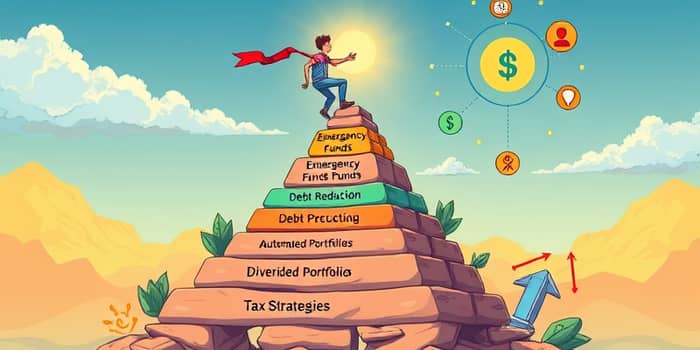
Every journey toward wealth begins with understanding who you are and where you want to go. In 2026’s shifting economic climate, success depends on more than luck or timing—it demands a clear plan, rooted in your individual values and aspirations.
Defining Your Wealth Persona
Wealth is not a one-size-fits-all concept. Your goals might range from financial independence varies by personal goals to building a lasting legacy for your family. By crafting a clear vision of what money means to you, you can tailor each decision to support your broader life ambitions.
High earners often fall victim to lifestyle creep: someone earning $250,000 a year who saves just 5% accumulates $12,500, while a household at $150,000 saving 20% builds $30,000. True wealth growth arises from disciplined habits, not just high income.
Step 1: Assess and Stabilize Foundations
Before chasing high returns, secure your financial base. prioritize cash flow over investing so you never gamble with your essential spending capacity. Follow this sequence to build rock-solid stability:
- Establish an emergency fund: Aim for 3–6 months of essential expenses, or up to 1–5 years of operating cash flow if you’re self-employed.
- Eliminate high-interest debt: Target credit cards and loans charging 20% or more before investing extra funds.
- Live below your means: Spend less than you earn to maintain flexibility and avoid financial stress.
- Optimize cash holdings: Keep 6+ months of reserves in savings or high-yield accounts; invest any excess to combat inflation.
This disciplined order of operations ensures you never sacrifice stability for potential gains, setting you up for consistent progress.
Step 2: Habits for Long-Term Wealth Building
Once your foundation is secure, cultivate habits that compound over years. Commit to small, repeatable actions that align with your wealth persona and SMART goals:
By embedding these routines into your daily life, you build momentum. Remember, automate contributions to retirement accounts and let compounding work on your behalf.
Step 3: Investment Strategies and Tax-Advantaged Accounts
With healthy habits in place, focus on allocating capital effectively. Begin by capturing the full benefits of employer matches and tax deferral:
- 401(k) Plans: Contribute at least to the match (a guaranteed 50–100% return on your contribution).
- Roth IRAs and HSAs: Layer in after-tax growth and triple tax advantages for health savings accounts.
- Brokerage Accounts: Use for flexibility—no contribution limits and easy access to funds when needed.
Choose low-cost index funds and systematic contribution plans to avoid timing the market. In 2026, shorter-duration fixed income may offer better yields, while equities remain essential for earnings growth.
Step 4: Advanced Planning and Protection
As your assets accumulate, sophisticated planning becomes critical. Develop a comprehensive wealth plan using tools for risk and cash flow analysis. Incorporate estate planning elements like wills, trusts, power of attorney, and healthcare directives to protect your legacy and family.
A strategic approach to debt can also enhance your portfolio: maintain low-cost loans on appreciating assets rather than liquidating positions prematurely. Over time, compounding returns can outperform the interest on cheap debt.
Each month, revisit your roadmap with a clear SMART goal. For example, aim to save $15,000 for a down payment by setting aside $625 every two weeks. Automate this transfer to your brokerage or savings to ensure consistency.
2026-Specific Insights and Mantra
The economic landscape in 2026 brings both challenges and opportunities. With potential Federal Reserve rate cuts totaling around 100 basis points and shifting tax policies, resilience is paramount.
- focus on resilience amid uncertainty: Maintain liquid buffers and avoid overexposure to long-duration bonds.
- Plan for tax changes: Review strategies for charitable giving, Roth conversions, and asset location before new rules take effect.
- Ignore short-term noise: Stick to your SMART goals and avoid reactive moves prompted by market headlines.
In every stage of your journey, remind yourself: consistency beats cleverness, and the gap between earnings and spending matters more than income alone. By evolving your wealth persona through disciplined habits, robust planning, and strategic execution, you empower yourself to achieve not just financial success, but lasting freedom and impact.
Your economic evolution starts today. Embrace the steps, adapt to change, and watch your personalized definition of wealth become a reality.
References
- https://www.edgeinvest.net/blog/redefining-wealth-2026-what-it-really-means-how-build-it
- https://www.highlandplanning.com/learning-center-1/five-financial-habits-that-build-and-maintain-long-term-wealth-in-2026
- https://www.youtube.com/watch?v=NuFEg9_-hNI
- https://privatebank.jpmorgan.com/nam/en/insights/markets-and-investing/ideas-and-insights/get-ready-for-2026-make-these-10-planning-moves-now
- https://www.ssga.com/us/en/individual/insights/2026-investor-roadmap-guide-to-managing-your-wealth
- https://www.firstcitizens.com/wealth/insights/planning/2026-wealth-planning-guide
- https://www.youtube.com/watch?v=4zZVCe7cFUg
- https://www.lindenbergfinancial.com/blog/how-to-build-a-12-month-wealth-plan-for-2026